
The 3,000% Blind Spot: Why the OSAP 'Evolving Data' Defense Fails the Receipts Test

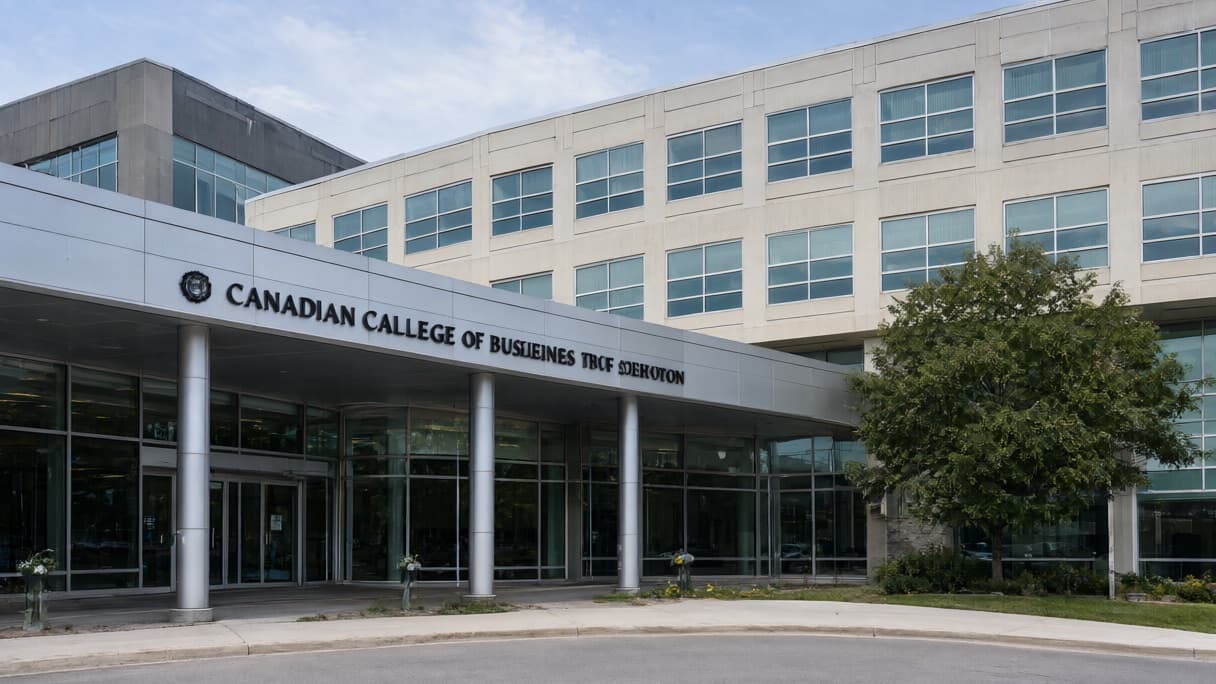
AI-generated image · Bay Street Wire
Minister Nolan Quinn claims the government acted on 'evolving' data to pause student aid, but disbursement logs show a massive surge in funding to one specific college that flew under the radar during May's initial crackdown.
When the Ontario government paused the Ontario Student Assistance Program (OSAP) for all private post-secondary institutions last month, Colleges and Universities Minister Nolan Quinn framed the move as a necessary response to a shifting landscape. As CBC Toronto first reported, Quinn told the outlet on Monday that the ministry acted once it received data showing certain institutions were "worse than what we initially thought," describing the information as "evolving."
However, the raw numbers obtained via freedom-of-information requests by The Canadian Press tell a different story—one of a massive, unchecked surge in funding that existed long before the system-wide pause.
### The May Cut-Off vs. The Outlier In May, Minister Quinn disqualified six career colleges from OSAP, citing concerns over "high-risk" admissions practices. According to reporting from CBC Toronto, those six schools had seen OSAP usage increase between 650 per cent and 1,375 per cent from the 2021-22 academic year to 2024-25. While those growth rates were significant enough to trigger a funding cutoff, one institution remained untouched: the Canadian College of Business, Science and Technology.
Data reveals that the Canadian College of Business, Science and Technology experienced an overall increase in OSAP use of 3,000 per cent during that same period. The scale of the growth at this institution dwarfed the schools the ministry initially flagged as high-risk.
### Following the Money: The 6,000% Spike To understand the magnitude of the oversight, one must look at the campus-level disbursement logs. Across the Greater Toronto Area, the Canadian College of Business, Science and Technology maintains four campuses. In the 2021-22 year, the college had 562 students accessing OSAP. By 2024-25, that number exploded to 17,157 students.
At one specific campus, the surge was even more extreme: * **Student Volume:** OSAP users grew from 74 students in 2021-22 to 4,481 in 2024-25—an increase of 5,955 per cent. * **Provincial Grants:** Funding for students at this single campus rose by more than 8,000 per cent, reaching $39 million.
Across all four campuses, students accounted for approximately $151 million in provincial grants in the 2024-25 year. Despite these figures, the college was not among the six institutions cut off in May.
### The 'Evolving' Narrative Minister Quinn's defense is that the government acted once the data became clear. He stated that the system-wide pause was implemented to ensure no other institutions "could have fallen through the cracks."
But for critics, the "evolving data" explanation is a matter of competence or intent. Liberal critic Tyler Watt told CBC Toronto that the ministry failed to stop the skyrocketing growth at the Canadian College of Business, Science and Technology until late this year. Watt posed a binary: either the ministry failed to catch the surge despite its touted inspections, or it identified the trend and chose not to act.
### Context of the Crackdown While the government now seeks to implement "guardrails" to ensure aid is used in good faith, the initial May cuts were based on warnings from the federal government provided a year prior. Those six schools are currently fighting the province's decision in court and deny any wrongdoing.
As the government continues its pause on private college funding, the discrepancy between the 1,375 per cent growth (which triggered a May cutoff) and the 3,000 per cent growth (which did not) suggests that the "red flags" were present in the logs long before the ministry decided the data had evolved enough to warrant a total freeze.