
Tesla's Terafab Gamble: Breaking the Silicon Ceiling

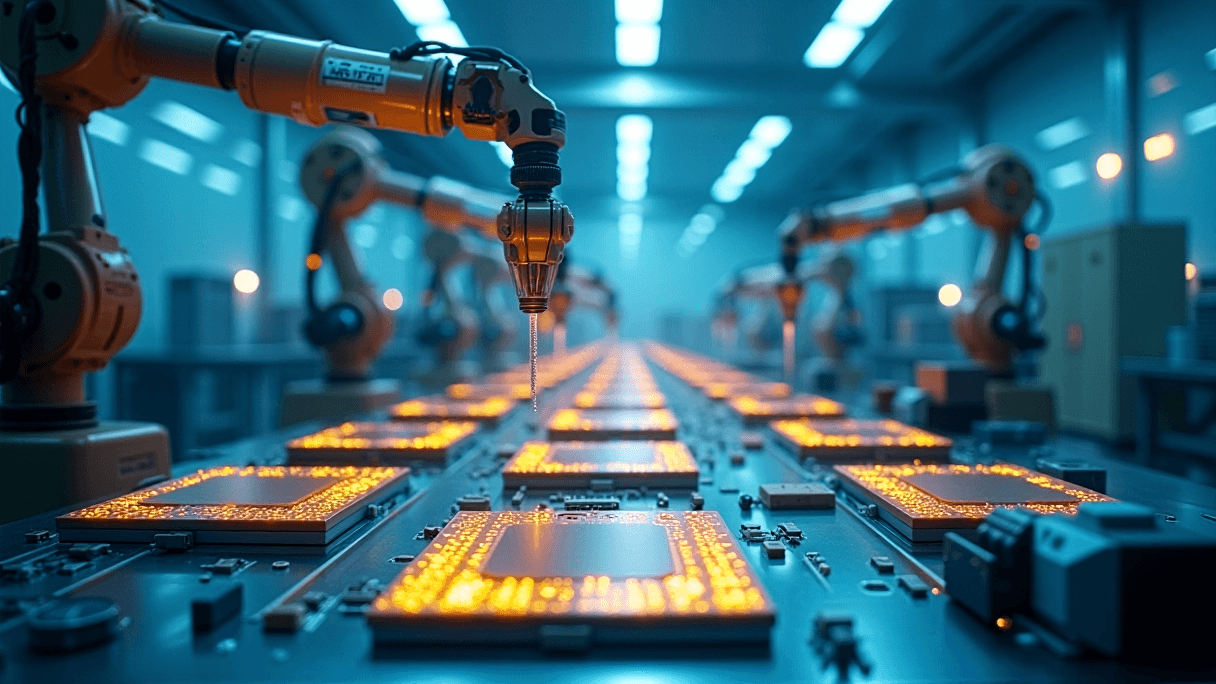
AI-generated image · Bay Street Wire
A $16.8 billion bet on a Texas chip factory suggests Elon Musk is tired of waiting for the rest of the industry to catch up to his hardware dreams.
In the world of consumer hardware, there is a recurring nightmare: designing a revolutionary product only to find that the available silicon can't actually run it. For Tesla, that nightmare is the gap between the promises of Full Self-Driving (FSD) and Optimus robots and the actual compute available on the market.
As TechCrunch first reported, Tesla and SpaceX are attempting to solve this by building "Terafab," a massive semiconductor factory in Grimes County, Texas. In my view, this is the only logical move for Tesla. If Musk wants to deploy millions of robots and autonomous Cybercabs, he cannot remain beholden to external chip roadmaps. He needs a vertical integration play that allows for recursive, rapid-fire hardware iterations.
Here is the breakdown of the Terafab project based on the latest details:
**The Scale of the Ambition** Tesla and SpaceX have announced an initial investment of $16.8 billion for the facility, which Elon Musk described as "the largest and most valuable building on Earth by far." TechCrunch reports that the planned manufacturing space exceeds 100 million square feet. While the initial investment is steep, SpaceX filings suggest the total cost across a "multi-phase" construction plan could reach as high as $119 billion.
**What Terafab Actually Does** This isn't just a warehouse; it's a full-stack semiconductor hub. SpaceX states on its website that the facility will integrate manufacturing, packaging, and testing for advanced logic and memory devices in one location. The goal is to produce chips specifically optimized for: * **Edge computing and inference:** Powering Tesla's Optimus robots and self-driving Cybercabs. * **High-power compute:** Operating SpaceX's space-based data centers.
**The Partnerships and Politics** While Tesla and SpaceX are leading the charge, TechCrunch notes that Intel has stated it will contribute to the project, though the company has remained vague regarding the specifics of its involvement.
Local reception in Texas has been mixed. TechCrunch reports that residents recently attended a county meeting to voice concerns over a lack of transparency and the millions of dollars in tax breaks granted to the project. However, Dr. Sarah Borowicz, Superintendent of the Anderson-Shiro Consolidated Independent School District, told the Texas Governor's office that the agreement will expand opportunities and strengthen the district.
From a hardware perspective, the move is a statement of intent. By bridging the divide between global supply and future compute demand, Tesla is attempting to ensure that the hardware limitations of today don't kill the robotaxi and humanoid dreams of tomorrow.