
Scarborough Transit: Visionary Planning or Election-Cycle Fantasy?

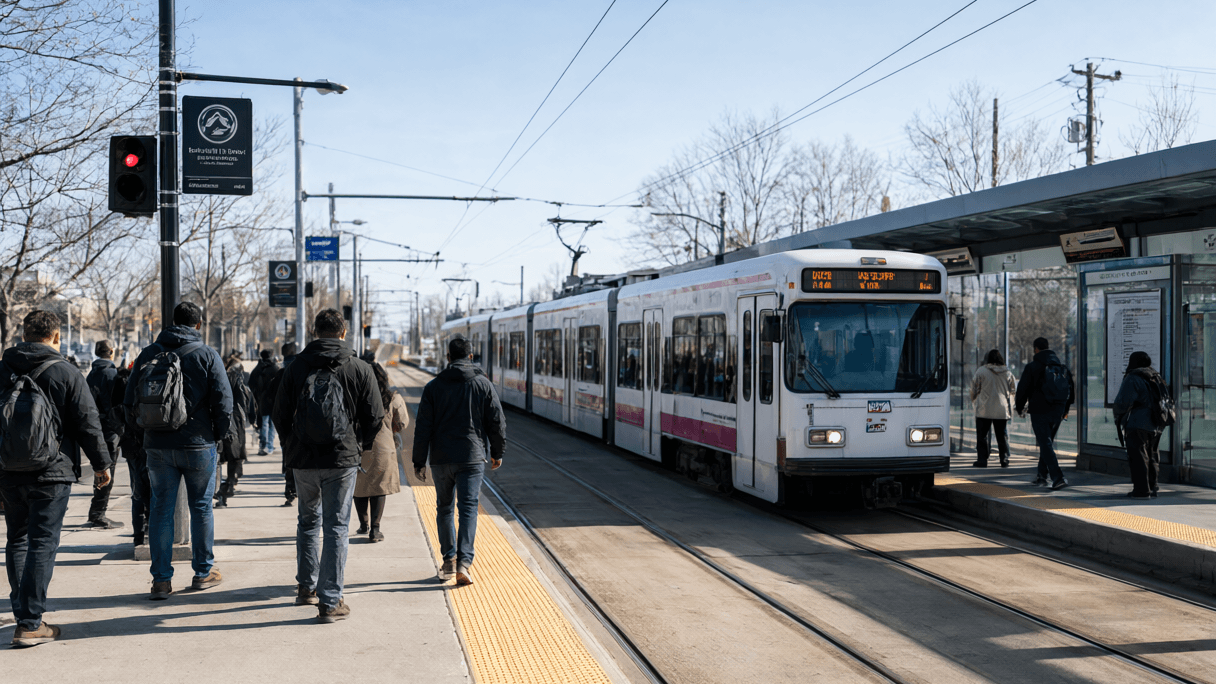
AI-generated image · Bay Street Wire
Opinion: As mayoral candidates Olivia Chow and Brad Bradford clash over the future of the east end, the gap between campaign promises and funded reality remains wide.
For the 620,000 residents of Scarborough, the phrase 'transit desert' isn't a metaphor—it is a daily reality. Since the 2023 decommissioning of the Line 3 Scarborough RT following a train derailment, the commute has become a grueling exercise in patience. Now, as Mayor Olivia Chow and Coun. Brad Bradford prepare for a Scarborough-centric debate hosted by the Scarborough Community Renewal Organization (SCRO), transit has once again become the primary political football.
As a columnist covering the daily grind, I have seen this cycle before, as CityNews Toronto first reported. Candidates trade bold soundbites, but the distance between a campaign promise and a functioning rail line is measured in billions of dollars and years of bureaucratic friction. The central point of contention here is the proposed Scarborough East Rapid Transit (SERT) project—an 18.6-kilometre line intended to connect Kennedy Station to Malvern Town Centre, with a stop at the University of Toronto Scarborough.
Bradford is leaning into the role of the disruptor. He has explicitly stated that the Eglinton East LRT will be his 'number one transit priority' if elected. He has gone as far as to guarantee that shovels will be in the ground for the project by 2030, the end of his first term. While the confidence is appealing, the math is murky. Bradford has indicated he will appeal in person to the federal and provincial governments for funding, but a guarantee of construction by 2030 is a massive gamble given the historical volatility of inter-governmental funding.
Olivia Chow, conversely, is playing a more cautious, administrative game. Rather than promising a specific date for groundbreaking, she is focusing on the mechanisms of funding. CityNews Toronto reports that Chow presented a motion to the City’s Executive Committee last April to request that the provincial and federal governments each commit to one-third of the project's costs. She is also proposing an additional $10 million investment from the City Building Fund Reserve—specifically allocated for Scarborough transit—to accelerate design work.
Between the two, Chow’s approach feels more grounded in the reality of municipal finance, but is it enough to satisfy a population that has 'suffered long enough'? Larry Whatmore, president of SCRO, rightly points out that while the Scarborough Busway opened six months early, it is a drop in the bucket for isolated east-enders. Even the Line 2 Bloor-Danforth subway extension, while promising, is still billions of dollars and at least four years away from completion.
What we are seeing is a classic political divide: Bradford is selling a deadline, while Chow is selling a process. Neither has a magic wand to conjure the necessary billions from the province or the federal government. As Whatmore noted to CityNews Toronto, there has been 'chatter' regarding the province extending the Sheppard subway east to McCowan or Morningside, but chatter does not move commuters.
If we want to avoid turning Scarborough into what Whatmore describes as a '21st century version of a dormitory suburb,' we need more than guarantees and motions. We need a funded mandate. Until one of these candidates can show us a signed check from the province, the SERT project remains a hopeful vision rather than a concrete plan. In the race for the mayor's office, the most valuable currency isn't a promise—it's a budget.