
Rust Hits the CAD Space: Is SolidCraft the Open-Source Disruptor for Hobbyists?

AI-generated image · Bay Street Wire
Built in pure Rust, SolidCraft brings a parametric feature timeline and a custom constraint solver to the masses, promising a bridge between professional-grade design and accessible, open-source hardware.
For years, the hobbyist 3D design world has been caught in a tug-of-war between intuitive but limited tools and professional parametric suites that often feel like they were designed for aerospace engineers in the 1990s. But as first reported by Hacker News, a new contender is emerging from the Rust ecosystem that might actually shift the gravity of the space.
The tool is called **SolidCraft**, an open-source application for parametric 3D CAD. While the market is crowded, SolidCraft is positioning itself as a high-performance alternative by being built in pure Rust. For those of us who track hardware, the choice of Rust isn't just a technical flex; it's a signal of intent regarding memory safety and execution speed—two things that usually crash a CAD program when you're trying to render a complex assembly.
### The Parametric Promise
At its core, SolidCraft is built around a parametric feature timeline. In plain English: you don't just draw a shape; you build a recipe for that shape. If you decide halfway through a project that a component needs to be larger, you don't start over. You change a dimension in the Parameters menu, and the model rebuilds itself.
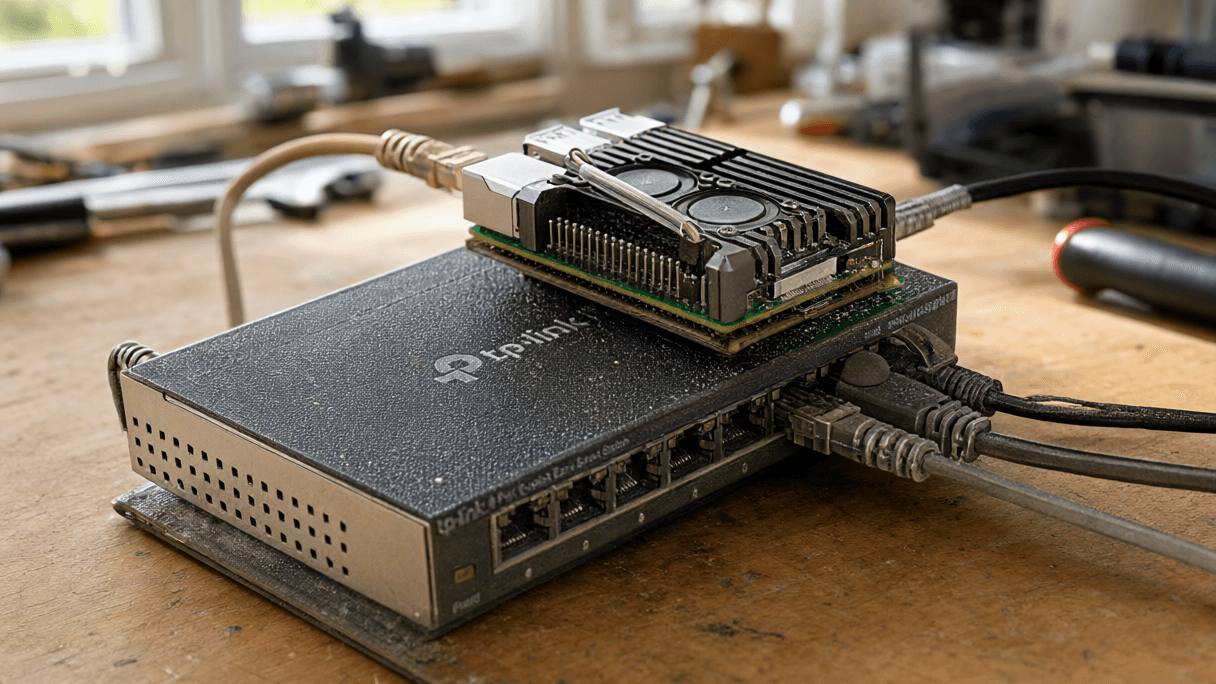
To demonstrate this, Hacker News highlights a demo involving a Raspberry Pi 4 case. The workflow starts with a sketch dimensioned to the board's parameters, followed by extrusions, fillets, and shelling. The user adds an M2.5 standoff patterned on a 58 × 49 mm hole rectangle, along with vent slots and port cut-outs. The real magic happens when the height is adjusted from 24mm to 32mm in the Parameters section; the entire model rebuilds automatically.
### Under the Hood: The Solver
One of the biggest hurdles for any CAD developer is the constraint solver—the engine that ensures a line stays perpendicular to another or that a circle remains concentric. SolidCraft isn't outsourcing this; it uses its own custom solver.
According to documentation provided via Hacker News, the system employs a hybrid approach. Points fixed relative to known geometry are placed exactly using rigid-cluster decomposition and loci intersections (referencing work by Owen 1991 and Fudos–Hoffmann 1997). For everything else, a Levenberg–Marquardt solver takes over, with the rank of its Jacobian determining the remaining degrees of freedom.
This allows for a robust set of constraints, including: * **Geometric:** Coincident, parallel, perpendicular, tangent, concentric, and collinear. * **Dimensional:** Radius, diameter, angle, arc length, and slot length, all driven by parameters.
When a sketch becomes fully constrained, the geometry turns black, giving the user immediate visual feedback that the design is locked in. If a user attempts an over-constraining edit, the software simply rejects it.
### Feature Set and Current State
SolidCraft is currently in an "early but usable" state for simple parts. It supports a wide array of sketching tools—including ellipses, conics, and fit/control splines—and a comprehensive list of 3D features such as revolve, sweep, loft, draft, and threads.
Interestingly, the developers have already integrated specialized tools for the maker crowd. The software includes sheet metal capabilities (flanges, hems, and flat patterns) and specific rules for plastic enclosures. It also provides the ability to export bend tables and exact outlines for circles, arcs, and lines in DXF format.
On the accuracy front, the project is transparent about its benchmarks. According to the `docs/oracle.md` file cited by Hacker News, 75 out of 76 public reference parts match their FreeCAD-computed or analytic volume, area, bounding box, and centre of mass. The single outlier is currently a tracked bug.
### Accessibility and the AI Angle
Perhaps the most disruptive element of SolidCraft is its deployment model. It is designed to run almost anywhere: Windows (including ARM64 and 32-bit), macOS (Intel and Apple silicon), and Linux (via AppImage, .deb, .rpm, Flatpak, or Snap).
But the real curveball is the browser integration and the MCP server. SolidCraft can be run directly in a web browser with no installation required. More provocatively, the built-in MCP server allows AI agents to handle the modeling process, potentially opening the door to text-to-CAD workflows that actually result in usable, parametric geometry rather than just static meshes.
### Theo's Take: Opinion
*Opinion: In my view, the most compelling part of SolidCraft isn't the feature list—it's the friction reduction. By offering a browser-based version and an open-source core, they are removing the "subscription tax" and the installation headache that keeps many hobbyists from diving into parametric design. If they can maintain the performance promised by Rust while refining that one remaining reference part bug, SolidCraft could become the default starting point for the open-hardware community.*
### Technical Specifications Summary
* **File Formats:** Uses `.solidcraft` design containers with lossless binary mesh payloads, while maintaining support for plain JSON. * **Exports:** Supports STEP (AP242) with body names and components, as well as IGES 5.3. * **Assembly Support:** Includes nested components, joints, motion studies, and material-aware mass properties.