
Opinion: The 'Convenience' Trap: Google's Biometric Login and the Illusion of Access

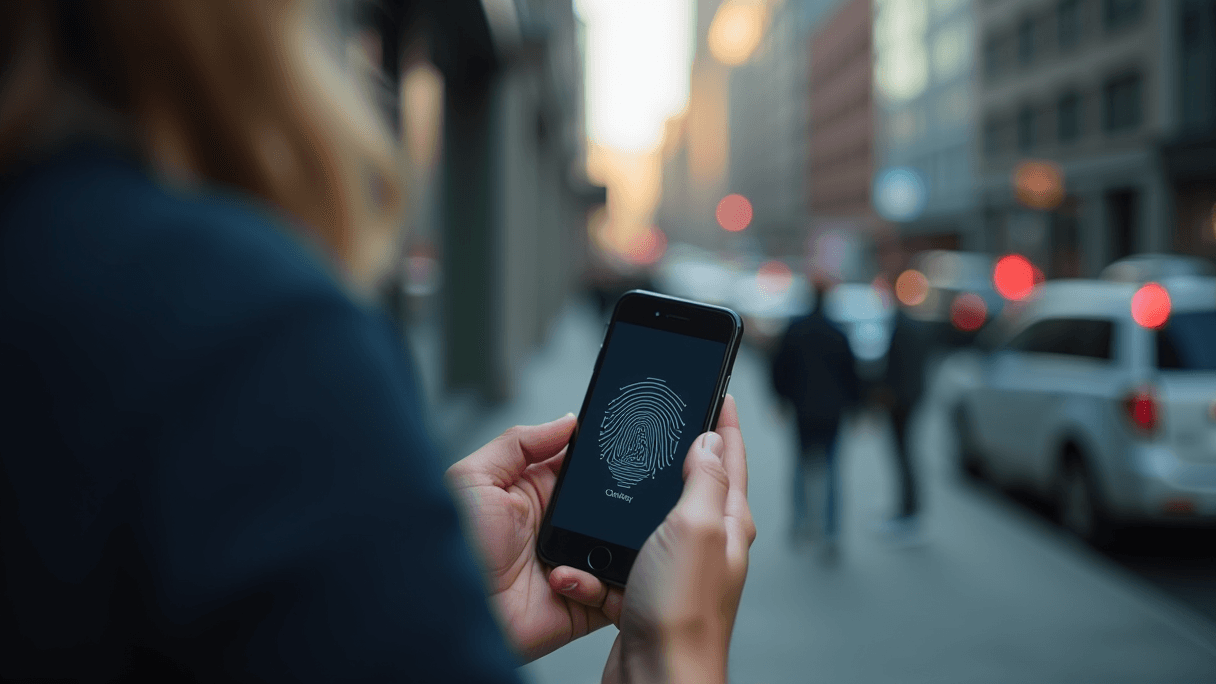
AI-generated image · Bay Street Wire
Google frames its new selfie-video sign-in as a way to help locked-out users, but the reliance on guided head movements and facial mapping risks creating new barriers for the very people it claims to assist.
Google is positioning its latest biometric update as a win for accessibility. According to a blog post featuring John Gronberg, Director of Product Management, and Claire Forszt, Product Manager of Google Identity and Engagement, the new "selfie video" sign-in is designed to provide more options for users who are locked out of their accounts or lack access to their usual devices.
On the surface, the mechanism is simple. As reported by TechCrunch, users set up the feature by looking into their camera and performing guided head movements—such as nodding or turning left and right—to allow Google to capture multiple angles of their face. If a user is later unable to sign in, they record a new selfie video, which Google compares against the original to verify identity.
But for those of us tracking inclusion in tech, the "simplicity" of these guided movements is a red flag. By requiring specific physical actions to prove "liveness" and map a face, Google is building a recovery system on the assumption of a specific type of able-bodiedness. When a system demands a user "obey" specific head movements to regain access to their digital life—in Ars Technica's pointed phrasing—it risks alienating users with mobility impairments or those whose facial structures do not align with the training data of these models.
Furthermore, while Google frames this as a tool for recovery, it is simultaneously expanding the utility of this biometric data. Ars Technica reports that these selfie videos can be used for age verification and the creation of AI avatars. There is even an optional toggle during setup that allows Google to use the video to improve its facial recognition technology.
Google claims the system is secure, stating in its blog post that it uses multiple layers of security to prevent impersonation attempts and deepfakes. However, the company's own internal hierarchy of security suggests otherwise. Ars Technica notes that Google has explicitly barred accounts enrolled in its Advanced Protection Program from using selfie sign-ins, requiring those users to stick to security keys instead.
By offering biometrics as a "convenient" backup while reserving the most robust security for a separate tier, Google is creating a fragmented experience. For marginalized users, the risk is twofold: they are more likely to be failed by the facial recognition technology itself and are being pushed toward a "convenience" feature that may actually be a barrier to entry.