
Opinion: Beyond the Backdrop: Old City Hall's Cinematic Potential

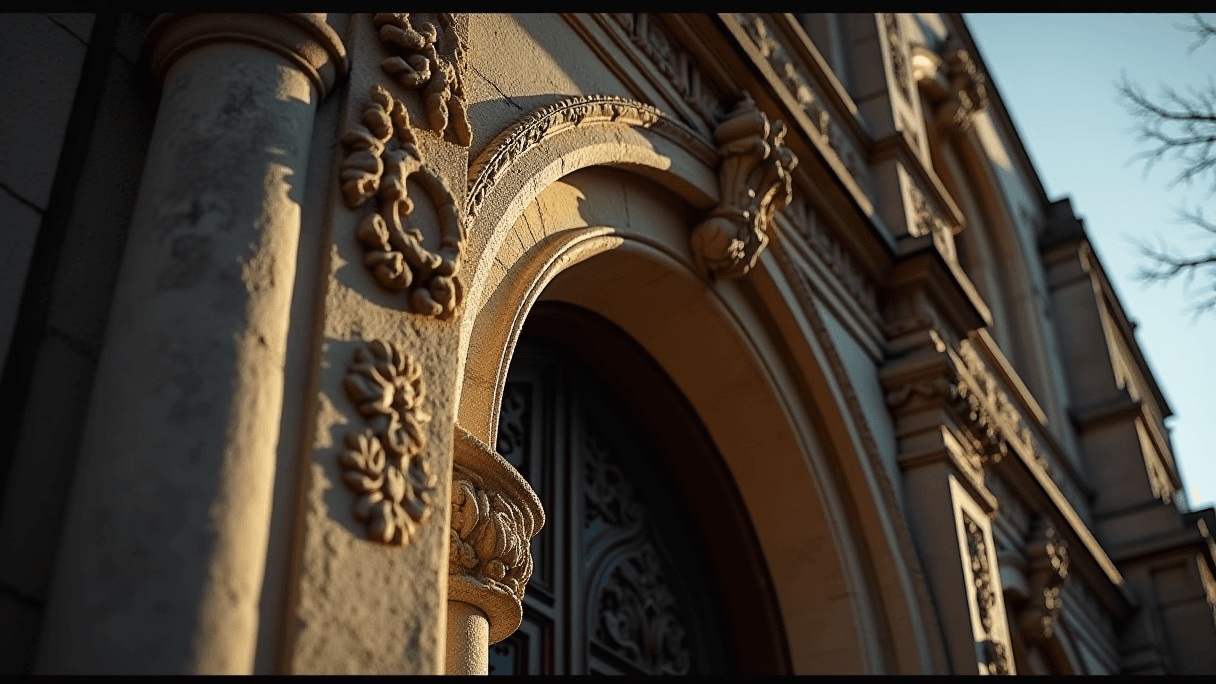
AI-generated image · Bay Street Wire
As city officials weigh changes to make the sandstone landmark more accessible to film crews, the building's gritty Romanesque charm offers more than just a sterile set.
Old City Hall has spent over a century as a hub for legal and political tension, and it is now poised for a scripted second act. According to BlogTO, city officials are currently reviewing a proposal titled "Improving the Usability of Old City Hall as a Filming Location," which is before City Council following a review by the Economic and Community Development Committee.
For too long, this Victorian-era landmark has been underutilized. While it has appeared in films such as *The Long Kiss Goodnight* and *Chicago*, the building has remained largely off-limits to the public since its construction. Now that the Ontario government vacated the premises in early 2025, there is a prime opportunity to leverage its architectural grit. With its Romanesque-style sandstone, a secular stained-glass window, and intricate carvings of humans and animals, the site possesses a character that no generic soundstage can replicate.
However, the path to becoming a production staple is hindered by bureaucracy. BlogTO reports that FilmOntario has backed the proposal to streamline access, noting that location scouts face limited access and productions are deterred by high fees and unexpected room-by-room charges.
As Toronto seeks to maintain its "Hollywood North" status—already hosting productions like *The Boys*, *The Testaments*, Sarah Polley's *Bell Jar* adaptation, and *Law & Order Toronto: Criminal Intent*—it is imperative that Old City Hall is not treated as a mere utility. If City Council approves the rule changes requested by the committee, the building can move beyond being a sterile backdrop and instead serve as a visceral, historic anchor for the city's screen industry.