
OpenAI’s Movable Speaker: A Bold Companion or a Costly Paperweight?

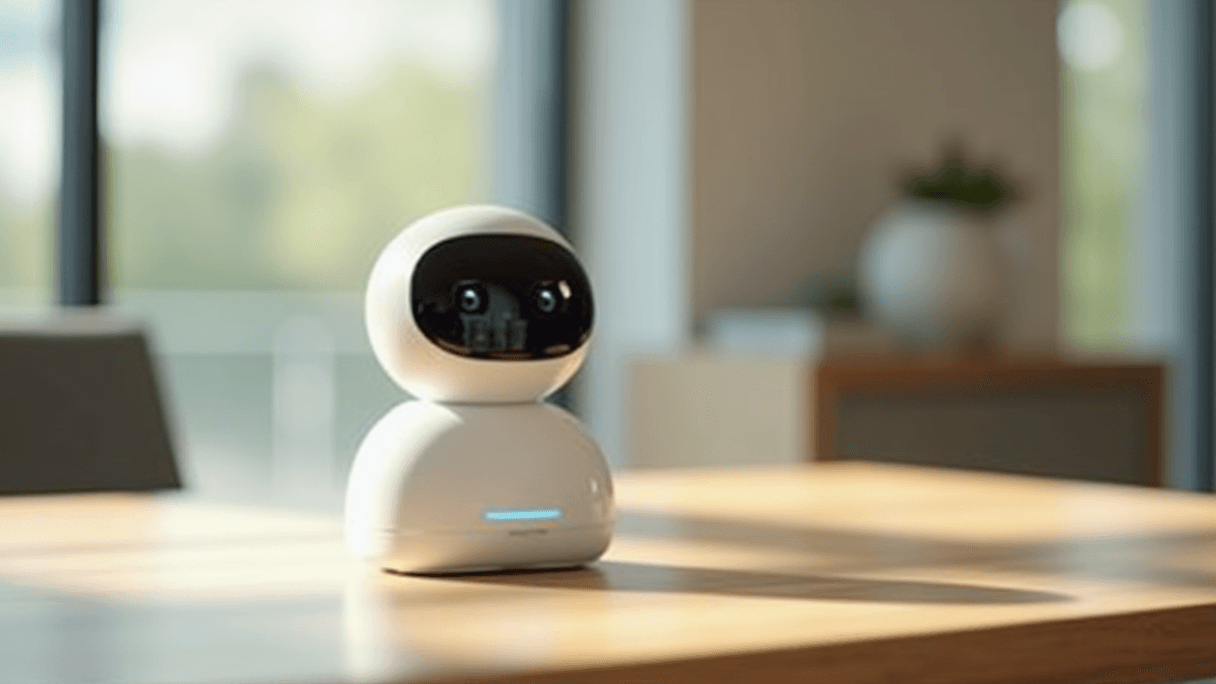
AI-generated image · Bay Street Wire
Reports surface of a screenless, movable AI device designed to be a 'physical manifestation' of ChatGPT, arriving amid a legal war with Apple.
OpenAI is reportedly venturing into the hardware market with a device that sounds more like a sci-fi prop than a productivity tool. According to reporting from Bloomberg via TechCrunch and Financial Post, the company is developing a mobile, screen-free smart speaker intended to serve as a "humanlike AI companion" for the home.
On paper, the device aims to be a "physical manifestation" of ChatGPT. Sources told Bloomberg that the hardware will feature "mechanical elements that can move on their own" and is designed to be easily moved around the house. Rather than acting as a static hub, the device is intended to proactively learn about its owner, drawing from digital data like emails to provide personalized service and anticipate user needs. According to the Financial Post, the device will handle standard smart-home tasks—controlling appliances, playing media, and responding to messages—while acting as an "expert" on the user.
**Opinion:** Here is where I struggle. OpenAI is betting on a "companion" bot, but without a screen or a clear, indispensable utility, we are looking at a very expensive, motorized paperweight. Movement for the sake of movement doesn't solve a user problem, and relying on "personality" to drive hardware adoption is a risky gamble in a crowded market.
Building this vision has required significant resources. Last year, OpenAI spent US$6.5 billion to acquire io Products as part of an effort to build up its device business, the Financial Post reports. Furthermore, TechCrunch notes that the project drew on former Apple engineers instrumental in creating products such as the iPhone and Mac.
However, this push into hardware has immediately collided with legal turmoil. TechCrunch reports that Apple sued OpenAI last week, alleging the theft of trade secrets. Apple has suggested these claims are only the "tip of the iceberg." While OpenAI has denied any wrongdoing, sources told Bloomberg that the company believes its new device "veers significantly" from Apple's current product lineup and is unlikely to violate any trade secrets.
OpenAI isn't the only player chasing this "personal intelligence" dream. TechCrunch points to Hark, an AI lab founded by Brett Adcock, which in May raised an oversubscribed $700 million Series A at a $6 billion valuation to build proprietary hardware designed as a "universal interface" between humans and machines. As OpenAI prepares for a potential initial public offering in the coming months, the device represents a critical next step that will vault the company into deeper competition with the likes of Alphabet's Google, Amazon, and Apple.