
Ontario Municipalities Clash Over Data Centre Expansion and Oversight

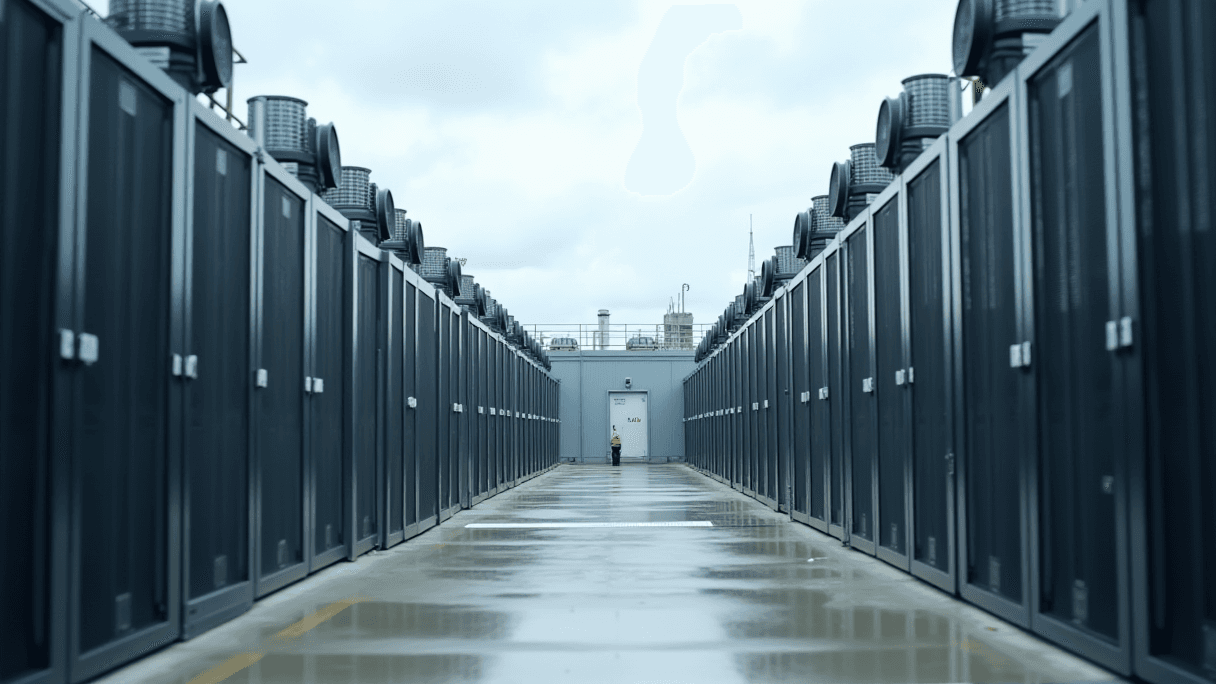
AI-generated image · Bay Street Wire
While Mississauga approves a one-year moratorium on AI data centres, Toronto residents demand similar pauses for projects linked to Microsoft and STACK Infrastructure.
Municipal leaders across Ontario are grappling with the rapid expansion of energy-intensive data centres, leading to a fractured regulatory landscape where some cities are halting development while others prioritize investment.
On July 29, 2026, Mississauga city council voted unanimously to approve a one-year moratorium on artificial intelligence data centres, according to Global News Toronto. The decision follows concerns over a proposed 50-100 megawatt hyperscale site located at Argentia Road and Tenth Line West, situated less than 300 metres from a residential area. Global News Toronto reports that city staff are now tasked with developing a protocol for evaluating applications and writing an interim control bylaw to enforce the pause.
In Toronto, residents are calling for a similar one-year moratorium on two specific projects. According to CityNews Toronto, protesters gathered at City Hall to demand a closer look at a proposed data centre by Microsoft at 48 Lowe’s Place in Etobicoke, as well as an expansion by STACK Infrastructure on Danforth Avenue in Scarborough.
Toronto city councillors have raised specific accountability questions regarding these developments. Coun. Vincent Crisanti has urged municipal staff to investigate water consumption, noise, and environmental impacts related to the Microsoft proposal. Meanwhile, Coun. Parthi Kandavel has questioned the ownership of the computing equipment and the location of data systems for the STACK Infrastructure project, noting that STACK is owned by an American asset manager. Kandavel cited Ottawa's position that sensitive data and critical AI infrastructure should remain under Canadian jurisdiction.
Community members in Toronto have expressed frustration over a lack of transparency. Lubaba Gemma told CityNews Toronto that a private developer entered a contract with the city without community consultation, while resident Diane Holmlund said she wasn’t familiar with how data centres operate until development began in her Scarborough neighbourhood.
The regional response remains inconsistent. Global News Toronto reports that Vaughan has already approved a hyperscale AI data centre that is expected to be operational by the second half of 2026. Conversely, Hamilton city council recently rejected a temporary pause on new facilities, with leaders suggesting such a move could jeopardize smaller research-based proposals and threaten industrial investments, according to CityNews Toronto.
Critics of the expansion highlight significant infrastructure trade-offs. Dr. Mili Roy, a physician advocate and University of Toronto doctor, told Global News Toronto that increased power demands could lead to a reliance on gas-fired electricity and that data centre water usage is linked to drinking water contamination and local water insecurity. In Toronto, resident Erin Mackey expressed concern to CityNews Toronto that these large-scale facilities could drive up utility costs for residents.