
MLB's New Cap Proposal: A Calculated Play to Quiet the Room

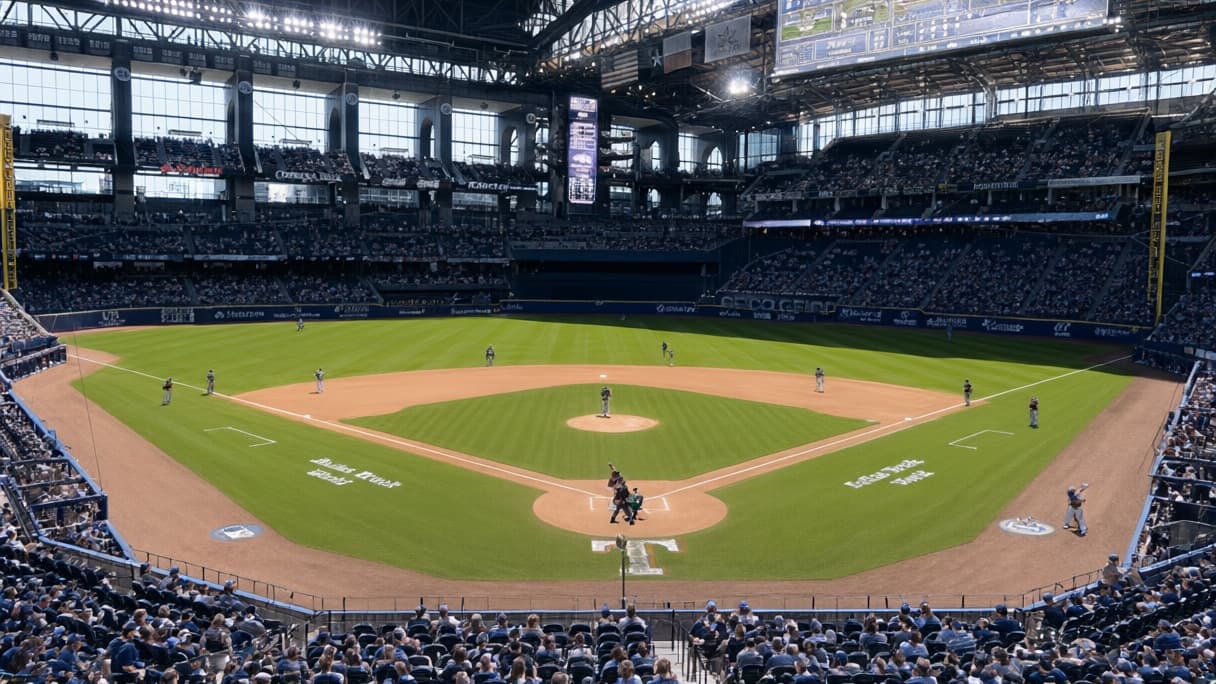
AI-generated image · Bay Street Wire
The league offers a delayed salary cap and floor system, attempting to balance owner demands with concessions for the rank-and-file.
OPINION: Let's call this what it is. Major League Baseball's latest proposal is a desperate attempt to appease the owners while pretending to save the middle class of the game. By shifting the goalposts on the salary cap and offering a handful of sweeteners to the players, the league is trying to maintain the status quo while dressing it up as a revolution in parity.
As MLB first reported, the league and the MLB Players Association met Tuesday, where MLB proposed delaying the implementation of a salary cap and floor system until 2028. The league argues this delay is necessary because the 2026-27 free-agent market is already underway, and some clubs have existing commitments that would put them over the proposed cap in 2027, while others would need massive payroll hikes to meet the floor.
MLB spokesman Glen Caplin stated that the 2028 start date would allow a "smoother transition" and provide clubs a full offseason to prepare. However, the numbers themselves tell a story of calculated adjustment. The projected 2028 floor is set at $180.2 million, and the cap is set at $258.2 million. This is an increase of nearly $13 million for the cap and $9 million for the floor compared to the initial 2027 proposal, which stood at $245.3 million and $171.2 million, respectively.
According to MLB, 12 clubs would need to raise their spending by a combined $636 million to reach the floor based on 2026 end-of-season payrolls. This group consists of the Marlins, Guardians, Cardinals, Rays, Nationals, White Sox, Twins, Rockies, Pirates, Athletics, Reds, and Brewers. Conversely, eight clubs would need to slash payrolls by a combined $528 million to fit under the cap: the Dodgers, Mets, Yankees, Phillies, Blue Jays, Padres, Red Sox, and Cubs.
To keep the players at the table, the league is dangling several carrots that would take effect in 2027, regardless of the 2028 cap delay. Per MLB, the proposal includes:
* **Minimum Salary Hikes:** An increase to $1 million for players with at least two years of service and $900,000 for those with less. This would mark the biggest year-over-year jump in minimum salary in the history of the sport. * **Free Agency Access:** Accepting a May 27 proposal to reduce the reserve period to five years for 30-year-old players. * **Draft Reform:** Eliminating the qualifying offer system that forces clubs to forfeit draft picks for signing certain free agents. * **Bonus Pools:** Raising the pre-arbitration bonus pool by 30%, taking it from $50 million in 2026 up to $65 million in 2027.
Further financial shifts include a plan to transition to a 50/50 revenue split with players and centralized media revenues in 2028. In the interim, MLB would allocate 2026 CBT proceeds as bonuses to players based on service accrued, with full-year players receiving $285,000. While the league claims this "levels the playing field," it is a transparent attempt to constrain the big spenders while giving the low-payroll clubs a convenient excuse to spend just enough to satisfy the floor.