
Logitech Doubles Down on Haptic Input with G Pro X3 Superstrike

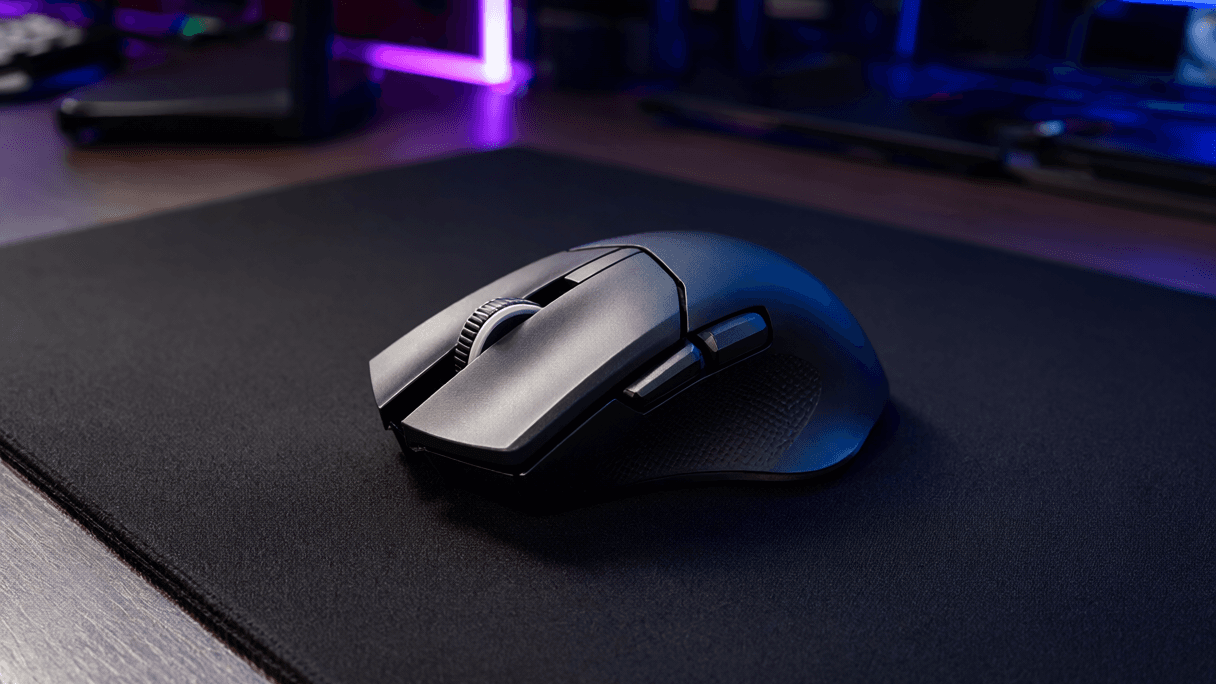
AI-generated image · Bay Street Wire
The latest iteration of the Superstrike line swaps mechanical switches for haptic actuators, but the incremental spec bumps raise questions about the architecture's scalability.
Logitech is pushing a fundamental shift in input hardware, moving away from traditional mechanical switches in favor of haptic actuators, as The Verge first reported. This architecture, which first appeared in the G Pro X2 Superstrike in February, allows users to customize the tactile feel of their clicks—ranging from subtle to jolty, or disabling the sensation entirely—while simultaneously reducing latency.
According to reporting from The Verge, Logitech is expanding this bet with the release of the G Pro X3 Superstrike, arriving October 6th. Priced at $199.99, the X3 represents a modest evolution of the X2, which remains on the market at $179.99. From a hardware perspective, the X3 introduces a Hero 2 sensor that pushes resolution to 48K DPI (up from 44K in the X2), increases maximum acceleration to 90G (up from 88G), and raises the maximum speed to 930 IPS (compared to 888 IPS in the previous model).
On the connectivity and power front, The Verge notes that the X3 now supports an 8,000Hz polling rate across both wired and wireless modes, whereas the X2 was limited to 8,000Hz wirelessly. Battery life has also seen a significant jump, with the X3 claiming up to 135 hours per charge, surpassing the 90-hour claim of the X2. This is achieved despite a weight reduction of two grams in the US version of the device.
**Opinion:** While the haptic actuators are a fascinating pivot in input design, the rapid release of the X3—with only incremental improvements over the X2—suggests Logitech is still refining the viability of this tech. For the average user, these spec bumps may be inconsequential, leaving the question of whether haptic-based clicking is a scalable replacement for mechanical switches or a high-priced curiosity for the enthusiast fringe.