
Locking In the Future: Why FIFA’s Double Host Award is a Commercial Necessity

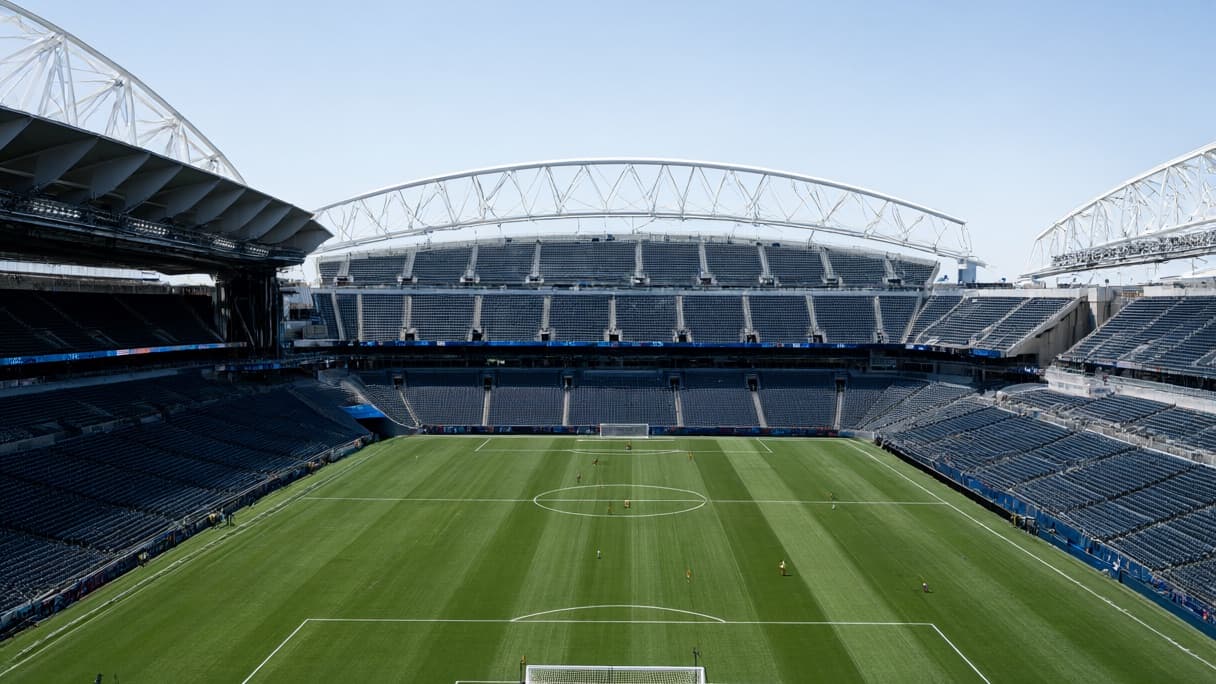
AI-generated image · Bay Street Wire
By securing the 2031 and 2035 Women's World Cups now, FIFA is moving past provisional planning toward a high-revenue, expanded era for the sport.
For too long, the growth of women's soccer has felt like a series of provisional steps. However, FIFA's recent decision to award the 2031 and 2035 Women's World Cups in a single stroke signals a pivot toward the long-term commercial stability the game requires to truly scale.
As first reported by Sportsnet, FIFA confirmed on Monday that the United States will co-host the 2031 tournament alongside Mexico, Costa Rica, and Jamaica. Following that, a United Kingdom-led bid, spearheaded by England, was ratified for the 2035 edition. By locking in these dates with two of the sport's global heavyweights, FIFA is creating a predictable roadmap for growth.
***
**Opinion: Breaking the Cycle**
In my view, the decision to award these tournaments without rival bids is not just a matter of convenience; it is a strategic necessity. The women's game cannot afford the volatility of short-term planning if it intends to reach the commercial heights of the men's game. By securing the U.S. and the UK—markets with massive infrastructure and fanbases—FIFA is ensuring that the commercial engine of the tournament remains stable as the event undergoes a massive structural expansion.
***
This stability is critical because the 2031 tournament will mark a historic shift in scale. As reported by Sportsnet, the 2031 edition will expand to 48 teams, matching the size of the men's World Cup. This represents a staggering growth trajectory from the 16-team tournament held in Germany in 2011.
When the scale of an event increases, the financial risk increases accordingly. This is why the revenue projections for the 2031 U.S.-led bid are so pivotal. Cindy Parlow Cone, president of the U.S. Soccer Federation, noted in a presentation to FIFA members in Zurich that the event will be the largest women's sporting event in history. While the bid previously predicted revenues of $4 billion, Parlow Cone stated after the decision that they will likely surpass that figure if executed correctly.
Beyond the balance sheets, this long-term planning allows for regional transformation. The 2031 project includes a diverse array of venues: 14 in the U.S., four in Mexico, Kingston in Jamaica, and San José in Costa Rica. Michael Ricketts, president of Jamaica's soccer body, noted that the island's team will receive automatic entry as a co-host. Parlow Cone emphasized that this is intended to "raise the boats of every country" in the region, specifically highlighting the transformative impact of the Reggae Girlz playing in their home stadium.
Similarly, the 2035 UK bid—encompassing England, Northern Ireland, Scotland, and Wales—provides a wide range of venues, including London's Wembley Stadium. Patrick Nelson, chief executive of the Northern Irish soccer body, highlighted the opportunity for Belfast's Windsor Park, a renovated 23,000-capacity stadium, to host games—a feat not possible for the men's European Championship due to size requirements.
FIFA President Gianni Infantino and the winning candidates have promised that all profits from these tournaments will be reinvested into women's soccer. By eliminating the uncertainty of future bidding wars and securing high-revenue hosts now, FIFA is finally providing the women's game with the institutional confidence it needs to move from a growth phase into a dominant commercial era.