
Lives in Limbo: Supreme Court to Rule on Quebec's Bill 21

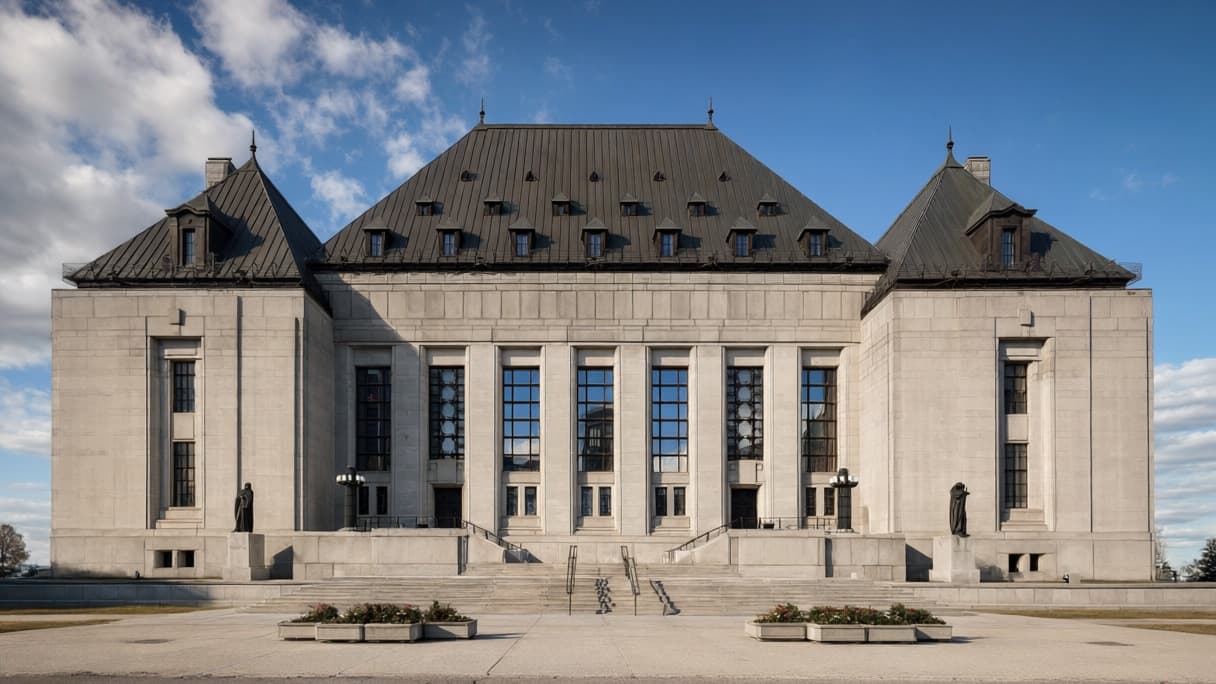
AI-generated image · Bay Street Wire
A Nov. 27 decision will determine the fate of a secularism law that prohibits civil servants from wearing religious symbols.
For the teachers, police officers, and daycare workers in Quebec, the daily act of dressing for work has become a point of constitutional friction. On Nov. 27 at 9:45 a.m. ET, the Supreme Court of Canada will issue a ruling on Bill 21, a secularism law that prohibits these civil servants from wearing religious symbols on the job.
Adopted in June 2019 by the Coalition Avenir Québec (CAQ) government, the law has sparked years of legal battles. According to CBC News, civil liberties groups argue the legislation specifically discriminates against Muslim women who wear head coverings. While a Quebec Superior Court judge previously ruled that the law violates the basic rights of religious minorities, the court found those violations permissible because the law utilized the Constitution's notwithstanding clause.
Beyond the courtroom, the impact of the law has expanded. CBC News reports that Quebec has extended the ban on religious symbols to include daycare workers and school support staff, while also implementing limits on public prayer. Further tension is mounting as the minority government formed by the sovereignist Parti Québécois (PQ) has vowed to extend the ban to children in schools, a move experts warn could lead to dehumanization and marginalization.
Numerous organizations are challenging the law, including the Canadian Civil Liberties Association (CCLA), the National Council of Canadian Muslims, and the English Montreal School Board. The final decision rests with the Supreme Court, though the bench has seen adjustments; Justice Mahmud Jamal recused himself due to his previous role presiding over the CCLA, and Alberta Justice Mary Moreau was excluded to avoid a potential four-to-four split decision.