
Global Push for Electrification Faces Infrastructure and Political Hurdles

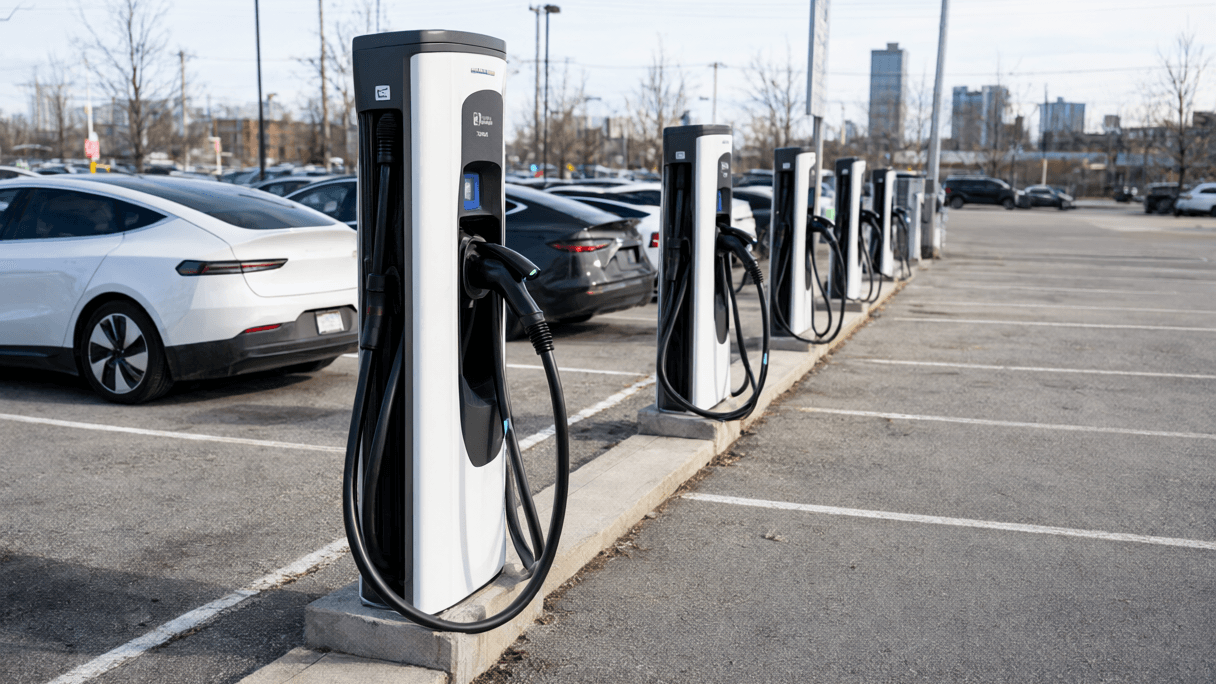
AI-generated image · Bay Street Wire
While the IEA highlights cost and security benefits of shifting to electricity, researchers warn of high upfront costs and political resistance.
The International Energy Agency (IEA) is advocating for a global shift toward electrification, as Ars Technica first reported, with climate policymakers in Bonn, Germany, discussing a target of 35 percent electrification of final energy by 2035. Fatih Birol, head of the IEA, told the United Nations that the "energy trilemma"—the balance of cost, security, and environmental impact—is increasingly aligning, partly due to fuel price spikes caused by the Iran war.
Reporting from Ars Technica notes that 2025 global averages from the IEA show electricity offers significant cost advantages over fossil fuels. For instance, $100 of electricity can power an electric vehicle for 2,310 miles, compared to 862 miles for a gasoline-powered car. Similarly, $100 of electricity can power a heat pump for 42 days, while the same amount for a gas boiler provides 30 days of heating.
Despite these efficiencies, researchers warn that the transition is not inevitable. David Victor, a professor at the University of California, San Diego, cited trade barriers and the difficulty of electrifying aircraft, maritime transport, and heavy trucks as major obstacles. Emily Grubert, a researcher at the University of Notre Dame, added that the transition is slowed by decision-makers prioritizing the profits of entrenched oil, natural gas, and coal industries.
Infrastructure costs remain a primary concern. Kenneth Medlock III of Rice University’s Baker Institute for Public Policy noted that arguments for electrification often overlook the high upfront costs of building systems. This is particularly acute in less wealthy nations; Chuks Okereke, a professor at the University of Bristol, stated that fossil fuels often make more short-term economic sense in Nigeria due to infrastructure costs, noting that international assistance from wealthy countries would be required for a net-positive transition.