
Following the Money: The $700 Billion AI Buildout Driving Consumer Price Spikes

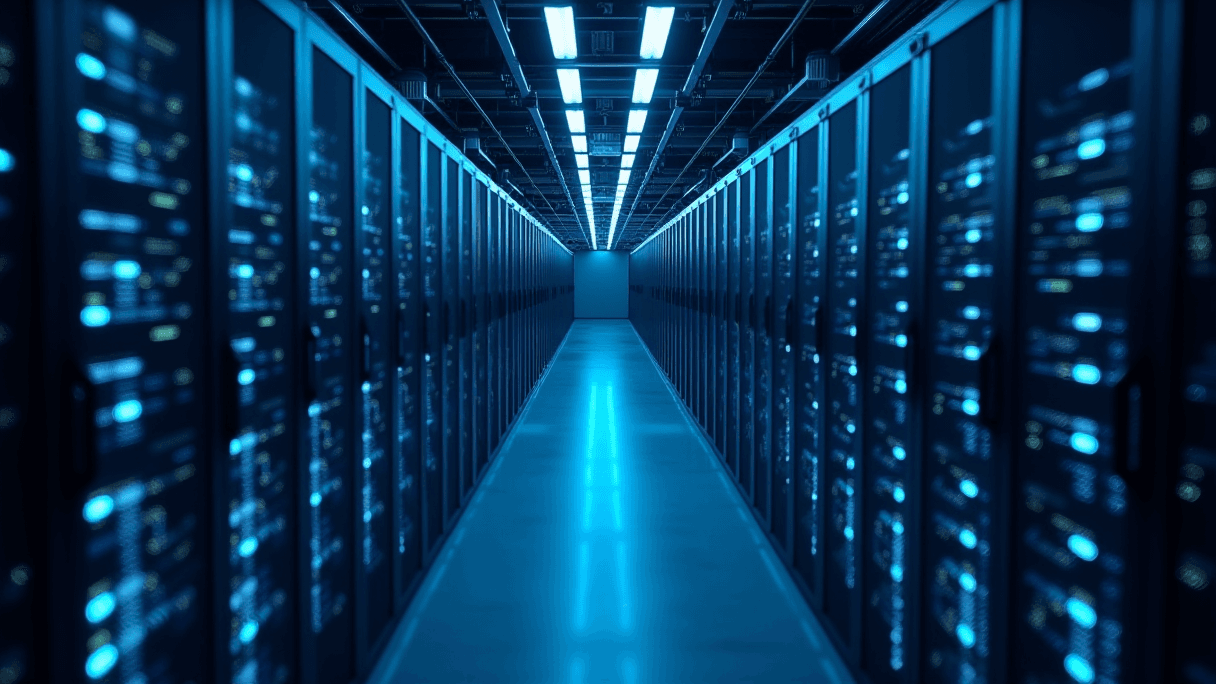
AI-generated image · Bay Street Wire
A surge in data center investment from four tech giants is creating a supply crunch in semiconductors and electricity, triggering price hikes for laptops, consoles, and power bills.
The roadmap for current inflationary pressures leads directly to a massive capital injection into artificial intelligence infrastructure. According to reporting from the Associated Press via CityNews Toronto, investment in data centers is expected to top $700 billion this year.
**The Capital Flow** Tracing the source of this spending reveals a heavy concentration of wealth. The Associated Press reports that just four companies—Alphabet (Google's parent), Amazon, Meta Platforms, and Microsoft—are projected to invest $720 billion this year, primarily focused on the construction and scaling of data centers.
**The Infrastructure Bottlenecks** This capital is flowing into two primary bottlenecks that are now spilling over into the consumer market:
1. **Semiconductors:** The rapid expansion of data centers has depleted chip supplies. Economists at JPMorgan Chase project that some computer memory chips could rise in cost by as much as 400% from 2024 through the end of this year. Apple explicitly cited an "extraordinary surge in demand for memory and storage" driven by AI data centers, noting that component price increases have occurred at an unprecedented speed.
2. **Electrical Capacity:** Data centers are absorbing a growing share of new electrical capacity. The Associated Press reports that this has forced power companies across the U.S. to add expensive new capacity, leading many utilities to raise electricity prices for consumers.
**The Consumer Receipts** These industrial bottlenecks are manifesting as direct price increases for retail hardware. The Associated Press identifies several specific corporate price adjustments:
* **Apple:** Increased prices for iPads and laptops by approximately 15% to 25%. A top-tier MacBook has risen from $1,699 to $1,999. * **Microsoft:** Announced a $100 price increase for the Xbox console, effective August 1, citing memory chip costs. * **Sony, Dell, and HP:** All have raised prices for the PlayStation or their respective laptop lines.
**Macroeconomic Implications** Analysts at Evercore ISI describe this as a "wave of AI-related cost pressures" that is still in its early stages. While many economists forecast that AI investment will only boost core consumer prices (excluding food and energy) by roughly a half-percentage point by year-end, the timing is critical.
Federal Reserve officials are monitoring these trends closely. While Fed Chair Kevin Warsh suggested AI could increase economic efficiency over time, other officials are concerned about persistent supply-demand imbalances. John Williams, president of the Federal Reserve Bank of New York and vice chair of the rate-setting committee, indicated that if AI creates a sustained impulse to demand relative to supply, the Fed may not "look through" the inflation, potentially leading to higher interest rates that would increase borrowing costs for mortgages, auto loans, and business loans.