
European Expertise, Local Ambition: The $4.3 Billion Ontario Line Bet

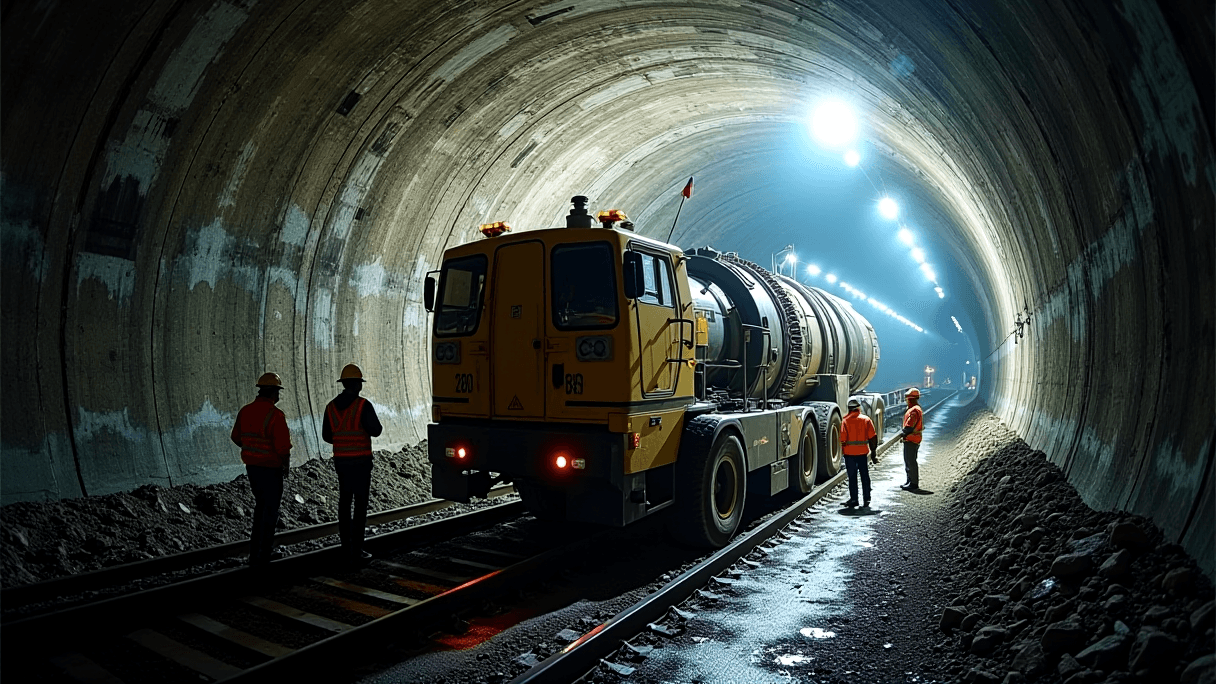
AI-generated image · Bay Street Wire
As Italy's Webuild and Spain's FCC Canada Ltd. begin work on the Pape Tunnel and Underground Stations, the project presents a critical juncture for integrating skilled newcomer labor into Canada's infrastructure pipeline.
### The European Blueprint
Toronto is currently witnessing the onset of a massive engineering undertaking that bridges the gap between European industrial expertise and Canadian urban necessity. As CBC Toronto first reported, a joint venture comprising Italy's Webuild Group and FCC Canada Ltd.—a subsidiary of Spain’s FCC Construcción—has signed a $4.32-billion contract to execute the Pape Tunnel and Underground Stations project.
This specific segment of the broader Ontario Line initiative involves the construction of two new underground stations, named Pape and Cosburn, along with three kilometers of new twin tunnels. A critical component of this engineering feat, as detailed by Infrastructure Ontario via CBC Toronto, is the underpinning of the existing TTC Pape station on Line 2 to ensure the new transit artery connects seamlessly with the established network.
### Scaling the Ontario Line
While the Pape Tunnel project is a significant milestone, it is one piece of a much larger puzzle. The Ontario Line is envisioned as a 15.6-kilometer stand-alone rapid transit system featuring 15 stations and more than 40 transit connections. The scale of the project is designed for massive urban impact; Infrastructure Ontario estimates that once the line is operational, more than 200,000 residents will live within a 10-minute walk of rapid transit.
Metrolinx CEO Michael Lindsay has previously indicated that the line is expected to open in the early 2030s, as reported by CBC Toronto. The involvement of the Webuild Group extends beyond the tunnel project; the company is also a member of Connect 6ix, a consortium that was awarded a $9 billion contract in 2022 by Metrolinx and Infrastructure Ontario to provide the technological systems and trains for the line.
### The Newcomer Opportunity: An Opinion
*Opinion: As a columnist focusing on the integration of newcomers, I view these multi-billion dollar contracts not just as transit solutions, but as potential engines for professional integration. When global firms like Webuild and FCC Canada Ltd. enter the Canadian market, they bring international standards and a need for specialized labor. For the thousands of skilled immigrants arriving in Canada—many with certifications and experience from the very European and global markets these companies operate in—these projects represent a tangible pathway to workforce integration.*
*The challenge for Ontario is ensuring that the 'execution stage' mentioned by Webuild translates into local employment opportunities for newcomers. If the province can align its immigration streams with the specific technical requirements of the Ontario Line, these infrastructure projects can serve as a bridge, allowing skilled laborers to apply their international expertise to Canadian soil, thereby reducing underemployment among newcomers while accelerating the delivery of critical transit.*
### Looking Toward the 2030s
As the joint venture enters the execution phase, the focus remains on the technical complexity of the twin tunnels and the integration of the Pape and Cosburn stations. With the combined investment of the $4.32-billion tunnel contract and the $9 billion Connect 6ix agreement, the financial commitment to the Ontario Line is staggering. However, the true measure of the project's success will not only be the reduction in commute times for 200,000 people, but how effectively the project absorbs and utilizes the diverse talent pool of Canada's newest residents.