
EFF and ACLU Push for Warrants in ALPR Surveillance Case

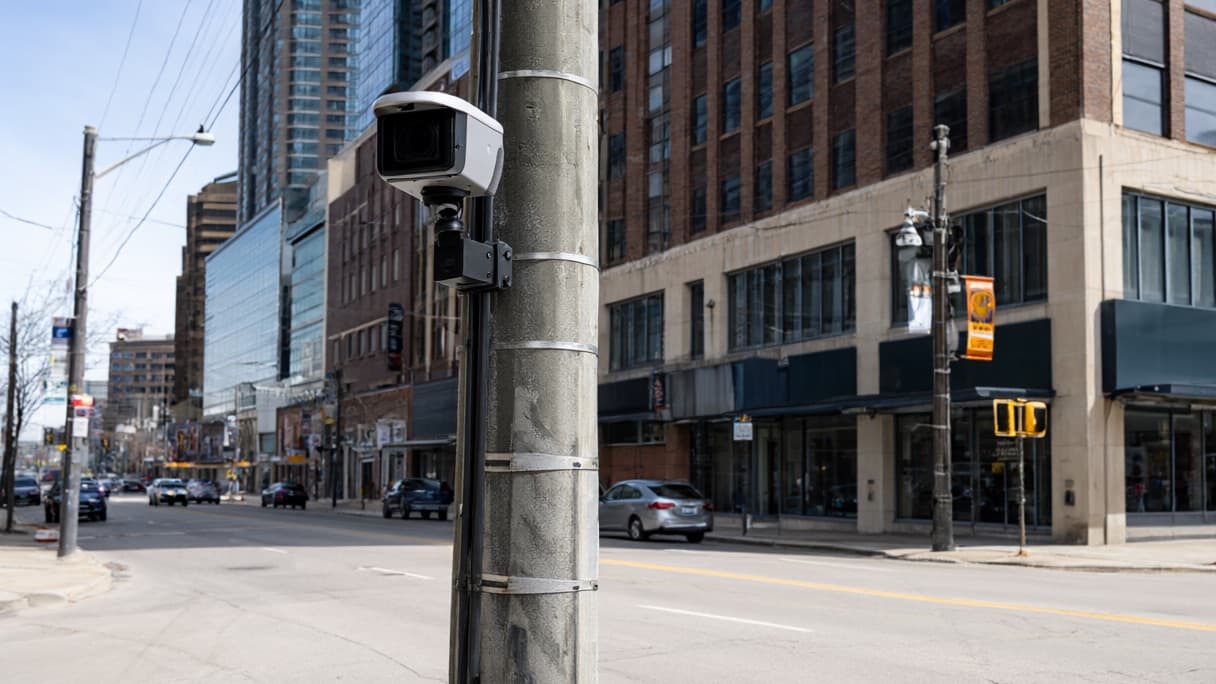
AI-generated image · Bay Street Wire
Legal challenge argues that Automated License Plate Readers create a mass surveillance network that violates Fourth Amendment privacy rights.
The Electronic Frontier Foundation (EFF) and the ACLU have filed an amicus brief with the Sixth Circuit court of appeals in the case of *United States v. Sturdivant*. As the EFF first reported, the filing argues that law enforcement must obtain a warrant before searching Automated License Plate Reader (ALPR) data.
The case stems from robberies in and around Cleveland, Ohio. After using surveillance footage to identify a suspect's vehicle make, model, and color, police conducted open-ended searches of two ALPR databases, ELSAG and Flock. This allowed officers to track a vehicle belonging to the defendant near the robbery sites, which led to his arrest.
A district court previously denied a motion to suppress this evidence, ruling that the defendant had no reasonable expectation of privacy regarding a license plate visible to the public. However, the EFF contends that ALPRs are not equivalent to a person observing a single car, but rather act as a "virtual time machine" capable of tracking the past movements of any individual.
While the EFF notes it has previously challenged ALPR usage in Wisconsin and San Jose, California, it points to a recent federal district court ruling that categorized ALPRs as a "form of indiscriminate mass surveillance" that can violate the Fourth Amendment. The EFF and ACLU are now seeking to have the Sixth Circuit reverse the lower court's decision.