
City Hall’s 'Buy Canadian' Rhetoric is a PR Stunt

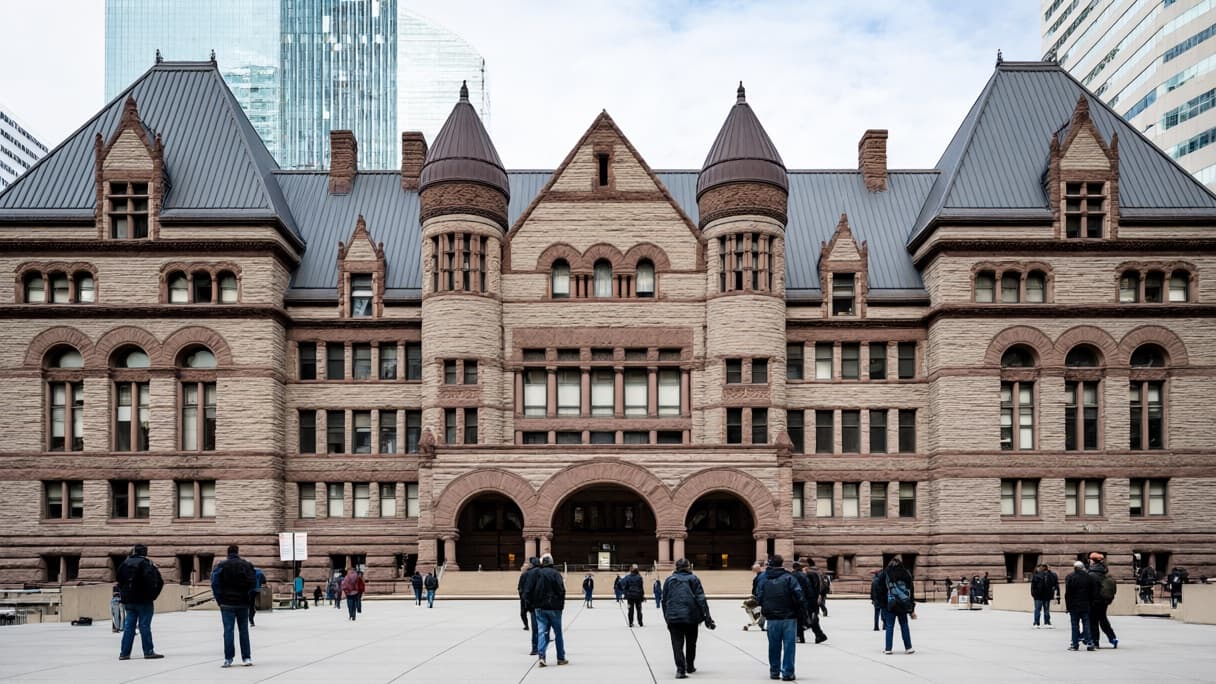
AI-generated image · Bay Street Wire
Opinion: While Toronto preaches local procurement, it is paying American firms to dig up our own backyard—proving that 'buying local' is a secondary priority to bureaucratic convenience.
City Hall loves to talk about local procurement. They love to signal their support for Canadian workers and the domestic economy. But as soon as the shovels hit the dirt, the rhetoric vanishes, replaced by a convenient reliance on American imports.
Case in point: the current water mains replacement project beneath Queen’s Park Crescent E. As CBC Toronto first reported, the city awarded a $17.7-million contract to Gio Crete Construction Ltd., a North York-based firm. While the contractor is Canadian, the materials being shoved into the ground next to Ontario's legislature are not. Gio Crete Construction sourced the steel pipes from a manufacturer in West Virginia.
This isn't just a minor procurement hiccup; it is a failure of will during a trade war. U.S. President Donald Trump has doubled tariffs on Canadian steel to 50 per cent in an attempt to cripple local suppliers. The result? Real-world devastation for Canadian workers. CBC Toronto reports that hundreds of workers at Algoma Steel in Sault Ste. Marie were laid off in March, and more than 100 workers were recently cut by Stelco in Hamilton.
Ron Wells, the president of United Steel Workers 1005 in Hamilton, argued that governments must make every effort to ensure that public spending helps protect Canadian employment. He expressed disappointment over the Toronto project, noting that while some products aren't made here, Canada needs to be more reliant on its own manufacturing.
City Hall’s excuses are as flimsy as they are predictable. Sabrina Dipietro, the city’s senior manager of purchasing client services, told CBC News that using U.S. products was "unavoidable" because the specialized pipes aren't manufactured in Canada. Dipietro also claimed the tender closed before the city's March 2025 tariff response plan was active and noted that, due to the contract's value, it would have remained open to international bidders regardless.
Let's be clear: when the city says something is "unavoidable," what they really mean is that they aren't willing to do the hard work of building a resilient local supply chain. They would rather send millions of tax dollars south of the border than challenge the status quo. Even councillor-elect Mike Layton, who represents the area of the work, admitted that some items must be sourced abroad to avoid repair delays, though he acknowledged the benefit of cycling tax dollars back into the Canadian economy.
Riley Brockington, president of the Association of Municipalities of Ontario, described the effort to buy local as trying to turn a "giant ship." But the ship isn't too big to turn; it's just being steered by people who prefer the path of least resistance.
If Toronto is serious about its "buy Canadian" posturing, it needs to stop treating local procurement as a suggestion and start treating it as a mandate. Until then, the city is simply paying American companies to help dismantle the Canadian steel industry, one pipe at a time.