
Cambridge Heavy Industries Bets on Benchtop Fusion

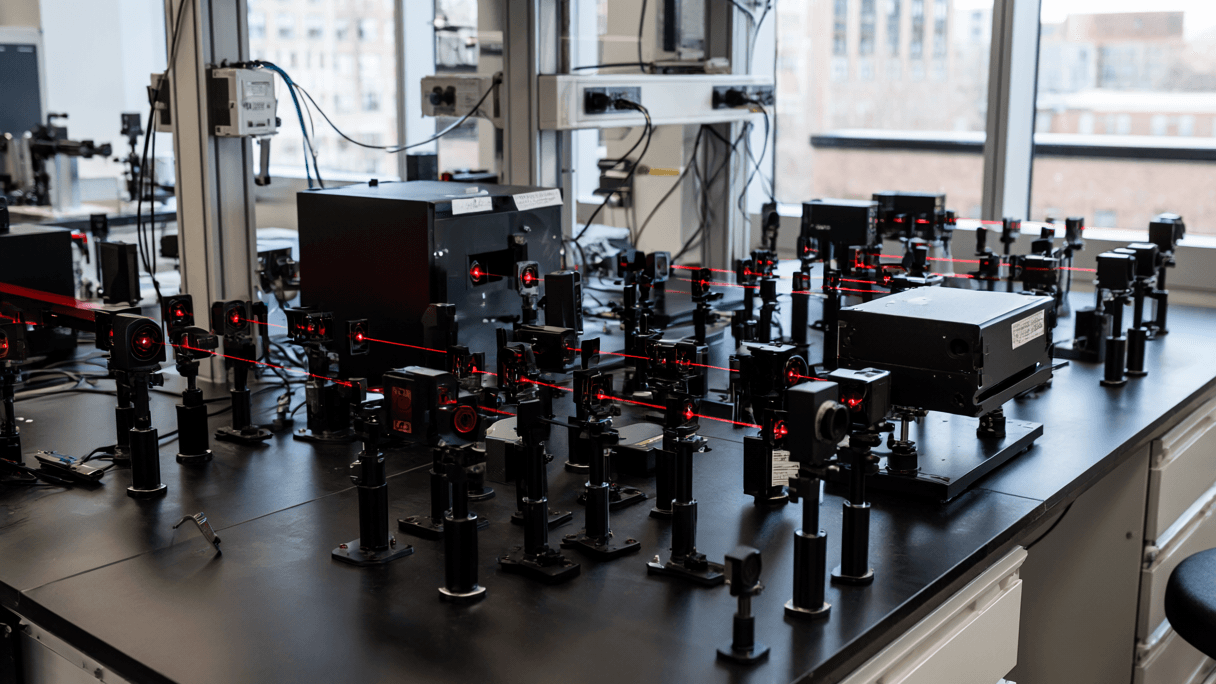
AI-generated image · Bay Street Wire
A Massachusetts startup claims it can iterate toward fusion power using a desktop-sized reactor and AI simulations.
Cambridge Heavy Industries, a startup operating in stealth near MIT, is developing a modular fusion device designed to fit on a tabletop. According to reporting from TechCrunch, the company's co-founder and CEO, Yun Kai, states the small scale allows the team to run 50 to 80 experiments per day, using AI to optimize the design based on that data.
The technology, which originated in the lab of MIT chemist Keith Nelson, utilizes two main lasers to compress a fuel target. One laser is split into concentric rings that hit the target successively to create a compression wave, while a second laser generates heat and a magnetic field to trigger fusion. Kai told TechCrunch the design achieves high pressures while requiring relatively low laser power.
While the current prototype is benchtop-sized, the company aims to develop a power plant within a decade. Kai describes the projected plant as being roughly the size of two basketball courts. In the interim, Cambridge Heavy Industries plans to generate revenue by producing tritium, a rare hydrogen isotope. TechCrunch notes that tritium currently sells for approximately $30,000 per gram, and one study suggests the fusion industry could face a 28-kilogram shortage by 2054, representing roughly $840 million in value.
The startup recently closed a $6.2 million seed round. The funding was led by Azolla Ventures, with participation from the Rothrock family, MassCEC, P3A, Neta Foundation, and Overlay.