
Blender 5.3 Introduces Native Gaussian Splatting Support

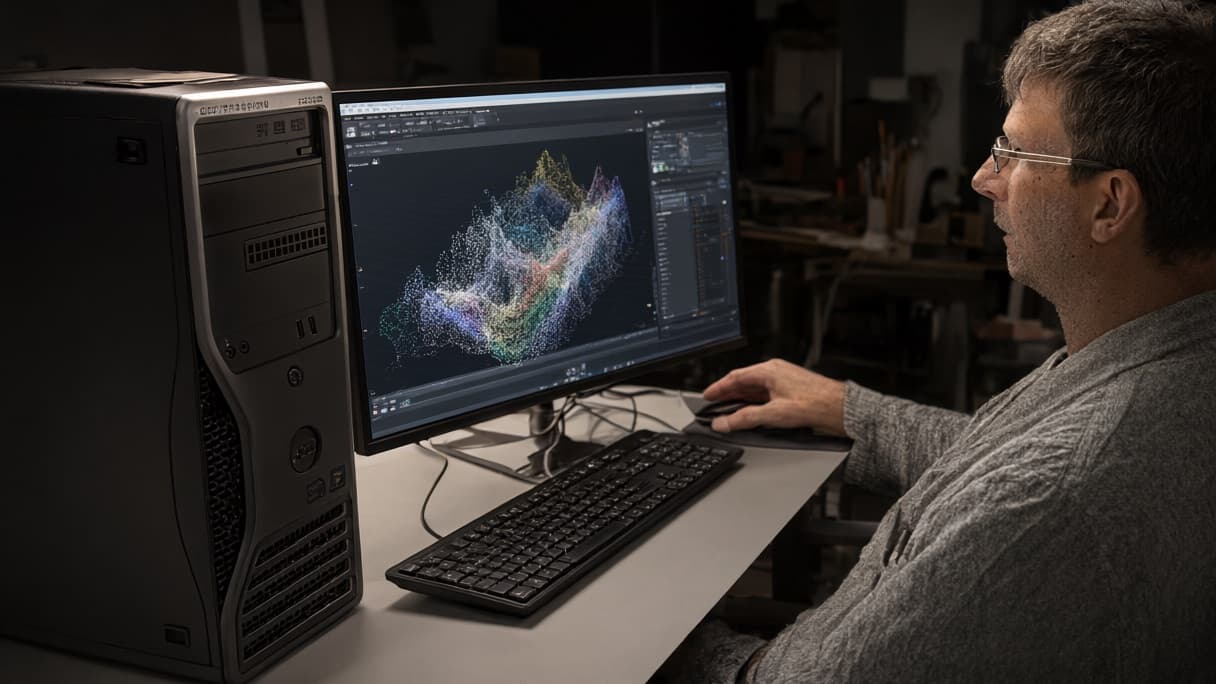
AI-generated image · Bay Street Wire
The latest release enables the import and rendering of photorealistic 3D scenes reconstructed from photos and videos.
Blender 5.3 has introduced native support for 3D Gaussian Splats, as blender.org first reported. The technology is used to reconstruct complex 3D scenes from video or photographic sources, and according to release notes, these splats are composed of small, transparent, soft blobs that represent shading and geometry.
Users can now import Gaussian Splats via glTF, SPZ, and PLY files. Once imported, the assets are stored as point clouds, which can be processed using Geometry Nodes. The software supports native rendering of these assets through Cycles, EEVEE, and the Workbench solid mode.
Technically, Blender represents these splats as point clouds with specific attributes, including rotation (via quaternion), scale (via vector), and radiance. The radiance attribute includes a 4D vector for base radiance and opacity, as well as coefficients for spherical harmonics bands. While these assets typically use an emissive shader by default, blender.org notes that basic relighting can be achieved by replacing the Emission node with a hard surface BSDF, such as Diffuse BSDF.
Blender notes that performance is currently being optimized. Additionally, some rendering inaccuracies may occur due to the difference between Blender's linear color space and the sRGB space utilized by most Gaussian Splat authoring tools, particularly in high-radiance or low-opacity areas.