
Biossil Hits Unicorn Status via OpenAI-Led Funding

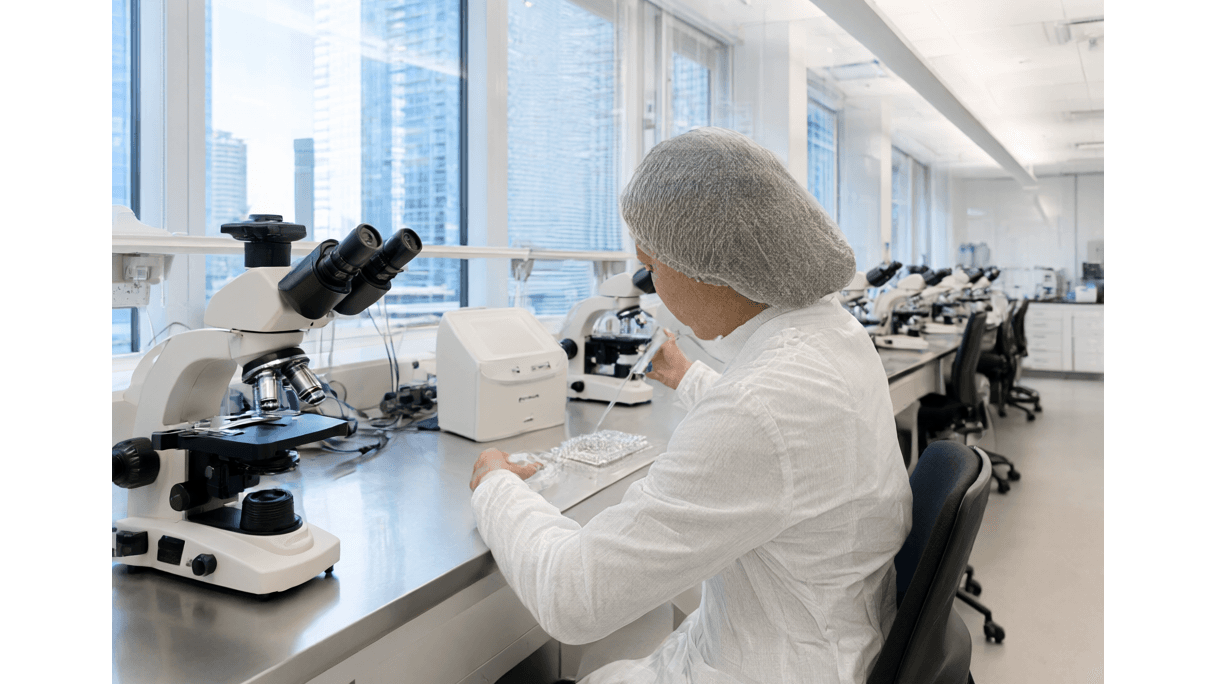
AI-generated image · Bay Street Wire
The Toronto biotech startup is betting that AI can resurrect failed drug projects, but the massive valuation raises questions about the intersection of LLM capital and clinical science.
Toronto's biotech scene just got a massive shot of adrenaline. Biossil has officially joined the unicorn ranks, according to reporting from BetaKit and The Globe and Mail.
**The Big Move** As first reported by The Globe and Mail, the Toronto-based firm raised $153 million USD ($216 million CAD) in an all-equity financing round that values the company at $1 billion USD. Biossil's co-founder and CEO, Anthony Mouchantaf, verified these figures in an email sent to BetaKit. The round was led by the OpenAI Startup Fund, with participation from a heavy-hitting group of investors including Founders Fund, Quiet Capital, Modern Capital, Golden Ventures, Panache Ventures, the Abu Dhabi Investment Council, and Duke University’s endowment fund.
**The Playbook** Biossil isn't following the traditional pharmaceutical path of starting from scratch. Instead, the company uses an AI platform to scout for molecules that were previously drug candidates but failed to complete their original clinical trials. When the AI identifies potential, Biossil buys or licenses those molecules to attempt a resurrection.
According to BetaKit, the company spent three years in stealth before emerging this past April with $70 million USD in funding. The new capital is earmarked for two primary goals: expanding clinical development capacity and acquiring more drug candidates for the pipeline. Biossil is currently targeting several high-stakes conditions, including Alzheimer’s disease, glioblastoma, breast cancer, idiopathic pulmonary fibrosis, and sickle cell disease.
**The Infrastructure Bet** While the valuation is the headline, the strategic goal is the infrastructure. In a LinkedIn post cited by BetaKit, Mouchantaf argued that AI-driven biomedical insights must be translated into the physical world to help patients, which requires a specific type of infrastructure that integrates AI and medicine from the discovery phase through to the clinic. Mouchantaf noted that Biossil is building this infrastructure across Canada and the United States.
**The Bigger Picture** Biossil isn't the only AI player eyeing the lab. BetaKit notes a broader trend of AI giants moving into healthcare; Anthropic has established a biolab in California, and the Canadian AI model developer Cohere acquired the biopharmaceutical data processing startup Reliant AI in May to speed up its own healthcare entry.
*Opinion: From my seat, Biossil hitting a billion-dollar valuation is a huge win for the local ecosystem—it proves Toronto can anchor a global biotech play. However, the involvement of OpenAI's capital brings up the inevitable question: is this a validation of the underlying science, or are we seeing the AI-hype bubble expand into the biotech sector? The real test won't be the valuation, but whether these 'resurrected' molecules actually make it to patients.*