
Beyond the Pilot: The Brutal Math of Scaling Canadian Cleantech

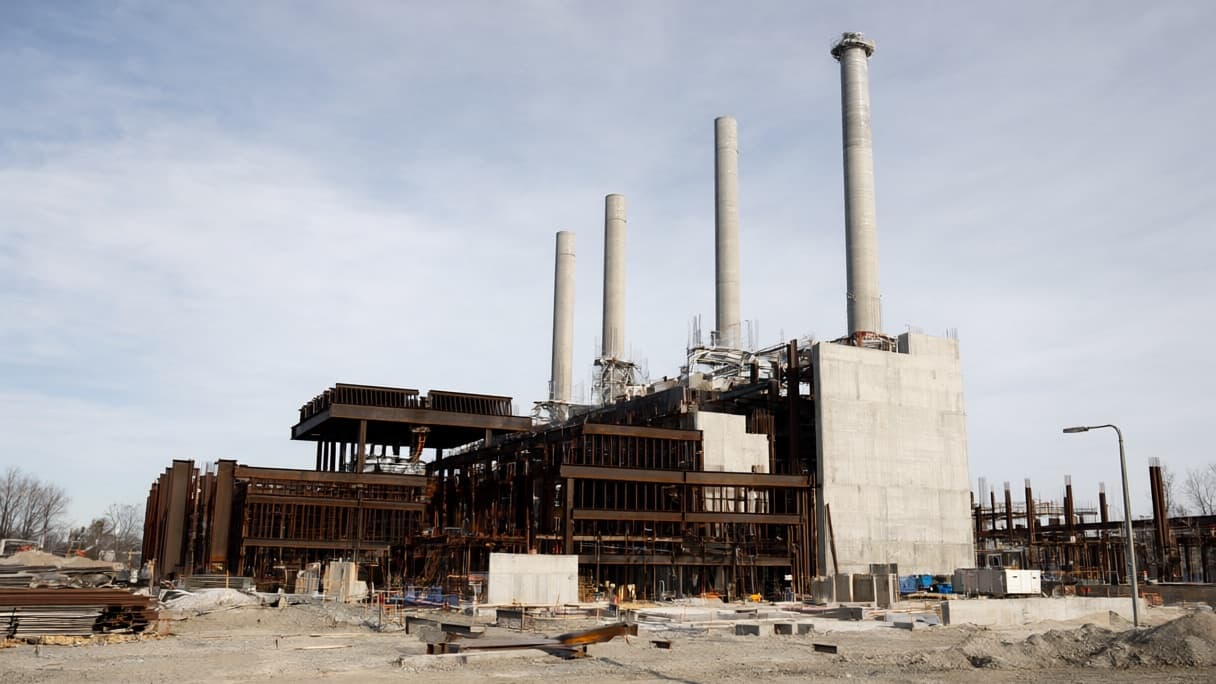
AI-generated image · Bay Street Wire
Opinion: To move from innovation to impact, Canada must solve the 'first-of-a-kind' financing gap and the risk-aversion currently stalling its best climate hardware.
For too long, the conversation around Canadian cleantech has been dominated by the thrill of the 'innovation' phase. We celebrate the breakthrough, the patent, and the successful pilot project. But as any industrialist will tell you, a pilot is not a business. It is a proof of concept. The real battle begins at the commercialization stage, and right now, Canada is hitting a wall.
As BetaKit first reported, a federal survey indicates that nearly two-thirds of Canadian tech companies have products at the commercialization stage. On paper, we have a massive pipeline of ready-to-market technologies. Yet, the transition from a demonstration project to a full-scale commercial deployment is where the most acute pressures emerge.
This is not a failure of ingenuity; it is a failure of industrial mechanics. As Tyler Hamilton, Senior Director of Climate at MaRS, explained to BetaKit, the burden of proof for hardtech companies regarding commercial traction and technical development is higher than ever. Unlike software, where scaling is often a matter of adding users, climate hardware requires physical infrastructure. Hamilton notes that establishing a first-of-a-kind manufacturing plant often requires investments ranging from tens to hundreds of millions of dollars.
Here is the pragmatic reality: investors willing to write those checks are scarce. We are seeing a tightening of the purse strings that threatens to strand world-class Canadian solutions. BetaKit reports that venture capital investment in Canadian cleantech has dropped to $660 million in 2025, a significant decline from the more than $1 billion raised in 2022. This volatility is compounded by the 2024 wind-down of Sustainable Development Technology Canada (SDTC), which Hamilton notes added further disruption to the sector.
If we want to move past the buzzwords, we have to address the 'first-of-a-kind' problem. These projects are the essential bridge between a proven pilot and a global market, but they carry risks that traditional venture capital is often unwilling to shoulder. When combined with data from Natural Resources Canada highlighting funding shortages and market uncertainty, it becomes clear that Canada's current appetite for commercial risk is insufficient for the scale of the crisis.
Events like the upcoming MaRS Climate Impact conference in Toronto on Nov. 17 and 18 are necessary, but they must be more than networking hubs. The focus on "policy, politics, and capital" is the right direction. We need to map out exactly how to secure earlier customer commitments and how to incentivize the deployment of capital into the industrial-scale facilities required for fusion, geothermal, and the next-generation water systems targeted in the 2026 program.
Canada has developed some of the world's most competitive climate solutions. But competitiveness in a lab does not equal competitiveness in a global market. To win, we must stop treating cleantech as a series of exciting experiments and start treating it as the industrial overhaul it is. The technology is ready; the question is whether our financial and policy frameworks are brave enough to actually deploy it.