
Beyond the Goggles: Why the Cessna Skyhawk Veris Marks the End of VR as a Toy

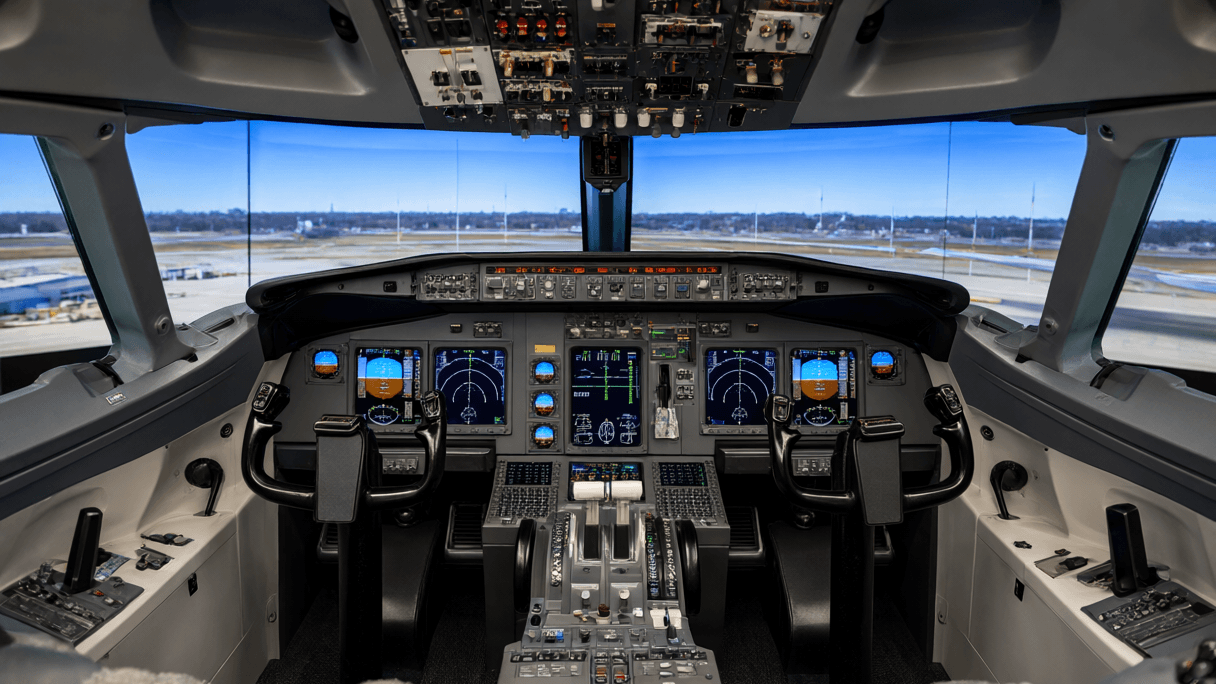
AI-generated image · Bay Street Wire
Kenji Tanaka argues that the debut of TRU Simulation's latest flight training device signals a shift where high-fidelity VR becomes the professional gold standard for certification.
Opinion: For years, virtual reality has been viewed as a novelty in gaming, but the aviation sector is now providing a blueprint for its maturation into an essential industrial tool.
As the Financial Post first reported, TRU Simulation + Training Inc. (a Textron Inc. company and Textron Aviation affiliate) is showcasing its Cessna Skyhawk Veris Virtual Reality Flight Training Device (FTD) at the 2026 National Business Aviation Association Business Aviation Convention & Exhibition (NBAA-BACE). In my view, this isn't just a product launch; it is a declaration that VR is ready for official certification. The system is engineered to satisfy Federal Aviation Administration (FAA) Level 7 FTD standards, moving the technology from a gaming peripheral to regulated industrial infrastructure.
The Veris distinguishes itself through high fidelity, featuring a cockpit that replicates Cessna Skyhawk controls and authentic Garmin G1000 NXi avionics. According to the Financial Post, students can train with or without the VR headset. Furthermore, CEO Jerry Messaris noted that the dual-seat configuration allows instructors and students to train together, supporting credit for all licensing phases from private pilot to flight instructor.
The business case is already proven: during NBAA-BACE 2025, TRU Simulation secured a purchase agreement with US Aviation Academy for five units. This proves that VR is no longer an experiment—it is becoming the gold standard for professional aviation training.