
Beyond the Facelift: Can 'Quiet Luxury' Save the Financial District's Dining Soul?

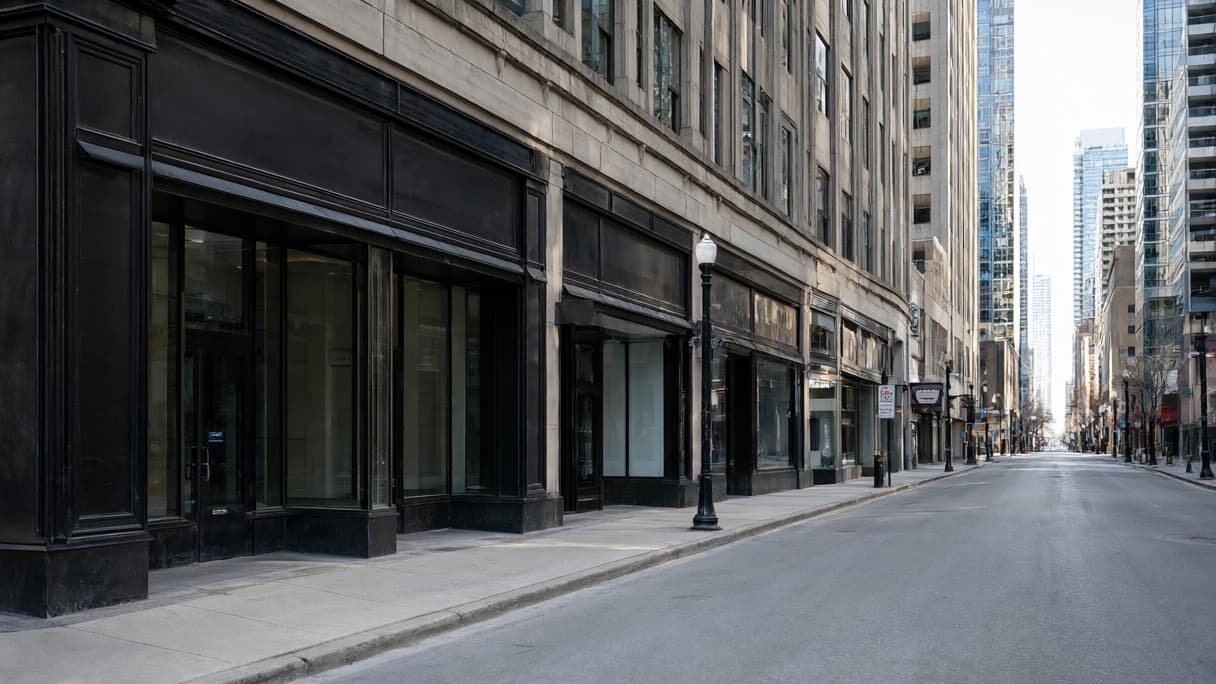
AI-generated image · Bay Street Wire
The reopening of Modus as Strella Strella highlights a desperate pivot for a corporate core struggling with vacant offices and a fading appetite for formality.
Opinion: For fifteen years, Modus was the definitive destination for the three-martini lunch, a sanctuary for Bay Street's power players. But as the corporate landscape shifted, so did the appetite of the Financial District. As BlogTO first reported, the closure of Modus in the summer of 2026 wasn't a surrender to bankruptcy, but a calculated admission that the old way of doing business—and dining—no longer fits the rhythm of the city.
According to reporting from BlogTO, the corporate core has been reeling from a seismic shift in work culture. The rise of virtual meetings and the persistence of hybrid and fully remote work models have left the district hollowed out. BlogTO notes that office vacancies in Toronto reached a peak around 2024, with approximately 18 per cent of office space in the Financial District sitting empty. For establishments that rely entirely on the foot traffic of white-collar workers, this isn't just a dip in revenue; it is an existential crisis.
Enter Strella Strella. Reopening on Nov. 10 at 145 King St. W., the new concept is an attempt by founder Sam Genkov to evolve. To modernize the vision, Genkov brought in his daughter, Victoria Genkov, to consult on the project. The goal is a departure from the "stilted formality" that once defined the neighborhood's dining scene. Victoria Genkov describes the new direction as one that is "elegant, welcoming," and designed to foster connection rather than the corporate hustle.
This shift is visible in the aesthetics and the menu. BlogTO reports that the redesign, led by Figure3, embraces a "quiet luxury" aesthetic, mirroring the refined simplicity of the Italian cuisine. While the Italian roots of Modus remain, the menu has been updated for modern tastes, introducing small bites and shareables to complement the classic crowd-pleasers. The beverage program has seen a similar overhaul, now featuring a lengthy aperitivo selection and tableside cocktail service to accompany an extensive Old World wine list.
But as we look at the transition from Modus to Strella Strella, the question remains: is a fresh coat of paint and a "youthful energy" enough to revive a district that has lost its pulse? While BlogTO suggests that office vacancy rates are currently on the rebound, the struggle to attract diners in a post-2020 world requires more than just a rebrand. It requires a fundamental reimagining of what the Financial District is for. If the area is to remain a dining destination, it cannot rely on the ghosts of the three-martini lunch; it must offer something that gives people a reason to return to the core when their laptops allow them to stay home.