
AMD's FSR 4 Ambiguity is a Betrayal of Handheld Early Adopters

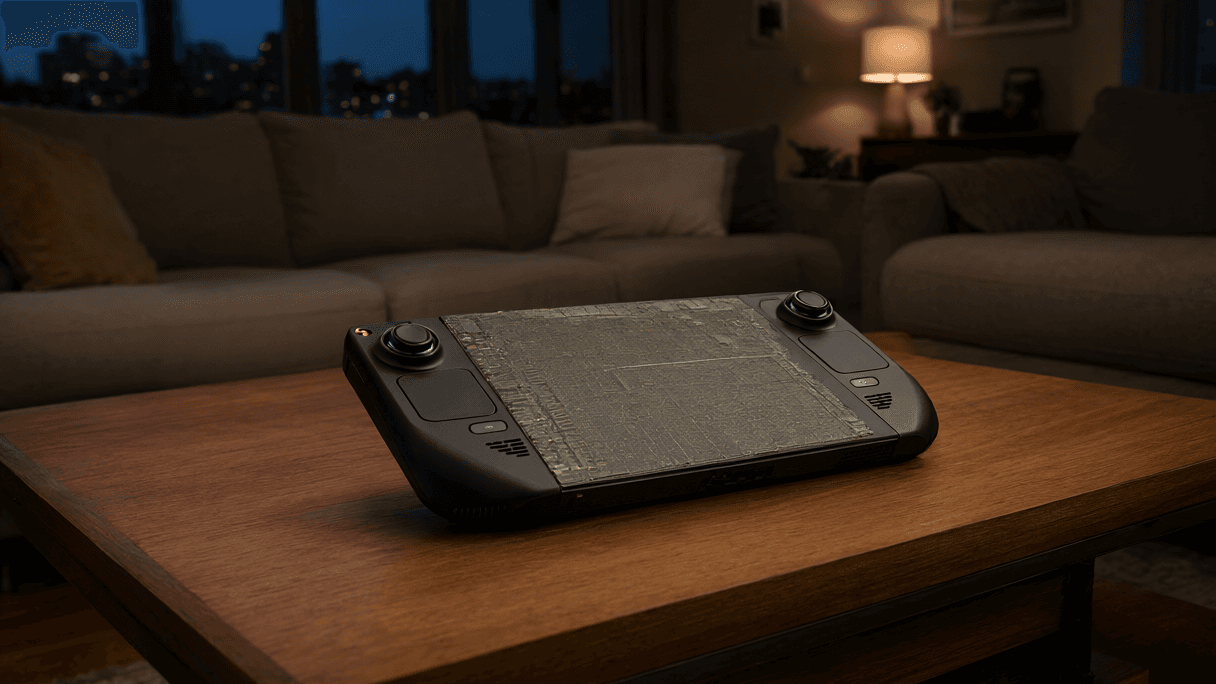
AI-generated image · Bay Street Wire
Opinion: By refusing to commit FSR 4 to existing hardware while teasing new chips, AMD is forcing users into a costly upgrade cycle.
As a reviewer who spends more time with handheld PCs than I do with my own desk, I've watched the hardware cycle accelerate at a dizzying pace. But the latest signals coming from AMD regarding FidelityFX Super Resolution 4 (FSR 4) aren't just confusing—they are a dangerous game of 'wait and see' that leaves current owners in the lurch.
For those unfamiliar, FSR is the kind of framerate-enhancing magic that makes a handheld feel like a powerhouse. Now, as The Verge first reported, we have a situation where AMD consumer chip boss Jack Huynh has told the Korean publication The Elec that the company intends to bring its machine learning AI-based FSR 4 technology to its entire product line—including handhelds and APUs—by the end of 2026.
On the surface, that sounds like a win. But look closer at the fine print, and the victory evaporates. While Huynh promises the tech will arrive, he doesn't explicitly confirm it will work on the devices currently sitting in gamers' backpacks. Instead, reporting from The Elec suggests a two-pronged approach: launching new product lines alongside existing APUs. This implies that while a 'lightweight' FSR 4 model for APUs may be coming, the real performance gains might be locked behind new silicon, such as the leaked "Gainsborough" or Ryzen Z3 chips.
This is where AMD's strategy becomes predatory. We've already seen the company hedge its bets. According to The Verge, AMD executive David McAfee previously told Tom's Guide that the company needs to ensure "the experience and the quality is right," noting that a "sufficient amount of compute" is required for FSR 4 to be viable.
Translation: Your current handheld might not be 'sufficient' enough for AMD's liking.
It is particularly galling considering the technical reality. The Verge reports that it is already possible to get FSR 4 boosts on devices as old as the Steam Deck. If the tech can function on existing hardware, AMD's hesitation to officially support it feels less like a quality-control measure and more like a calculated push toward the next hardware purchase.
Even Valve, the architects of the Steam Deck, haven't provided a safety net here. While The Verge notes Valve worked with AMD to bring FSR 4 to the Steam Machine's console-grade APU, they have yet to commit to doing the same for the Steam Deck handhelds.
By leaving the door open but refusing to walk through it, AMD is essentially telling handheld owners that their hardware is on a countdown. When a company reserves the right to disappoint its most loyal early adopters, it erodes the trust necessary to sustain a handheld ecosystem. If FSR 4 is the key to the next generation of performance, locking it behind a new chip purchase isn't 'ensuring quality'—it's forced obsolescence. AMD needs to stop the corporate speak and tell us exactly which devices are supported, or admit that FSR 4 is simply a marketing tool to sell the next batch of Z-series chips.