
A Unified Front: Why Ontario's Teacher Strike Mandates Signal a Systemic Failure

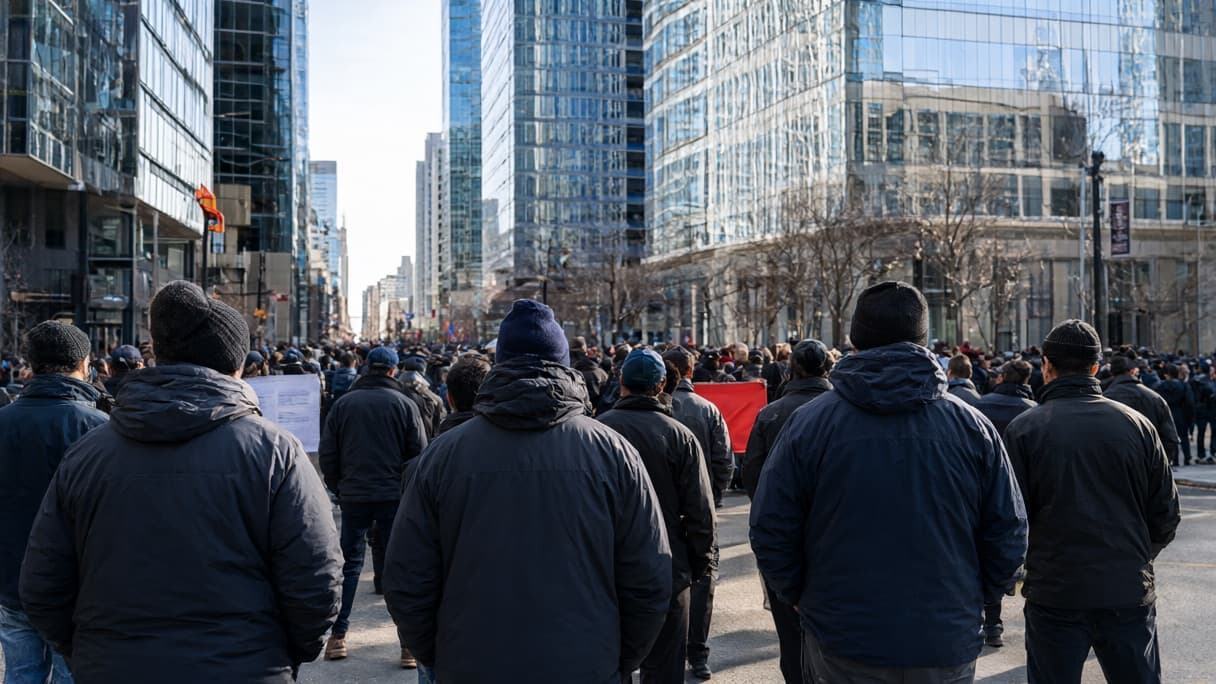
AI-generated image · Bay Street Wire
With five unions representing over 250,000 workers voting overwhelmingly for strike action, the province's dismissive approach to bargaining risks leaving students to pay the price.
OPINION
The sheer scale of the recent strike votes across Ontario's education sector is not merely a procedural step in collective bargaining; it is a loud, unified indictment of the province's approach to public education. As CBC Toronto first reported, five different unions representing more than 250,000 teachers and education workers all voted in favor of strike action in a single week, and the government can no longer afford to view these mandates as simple invitations to the table.
According to reporting from CBC Toronto, the level of support for these mandates was staggering. English Catholic teachers led the way with 98 percent in favor, followed by elementary teachers at 97 percent and French and secondary school teachers at 96 percent. Even the education workers saw strong support, with those represented by CUPE voting 94 percent in favor and those from the Ontario Secondary School Teachers’ Federation voting 92 percent in favor.
This is not a fragmented workforce; it is a systemic uprising. In a joint statement, the presidents of all five unions declared that the "status quo is unsustainable," noting that the mandates reflect a deep-seated frustration felt across the entire province. David Mastin, president of the Elementary Teachers' Federation of Ontario, explicitly linked this anger to "years of chronic underfunding and deteriorating learning and working conditions."
Despite this, the provincial response has been characterized by a jarring lack of urgency. Education Minister Paul Calandra told reporters he was "not stressed" by the votes and speculated that any potential strikes would not occur until after March break. Calandra's attempt to reframe the overwhelming mandates as a positive sign—suggesting they show teachers are simply "eager to reach a deal"—is a dangerous misreading of the room. The Elementary Teachers' Federation of Ontario noted that this characterization "misses the point entirely."
The friction is not just about the numbers on a paycheck. CBC Toronto reports that previous talks stalled because the province and the unions could not agree on which issues should be handled centrally versus locally with school boards. While Rafael Gomez, an employment relations professor at the University of Toronto, suggested that wages are easier to negotiate than "existential policy questions," the unions are signaling that the current conditions in the classroom have become an existential crisis of their own.
James Turk, director of the Centre for Free Expression at Toronto Metropolitan University, warned CBC Toronto that these votes should not be discounted, as workers do not casually choose a path that makes their own lives more difficult.
If the government continues to treat these mandates as a curiosity rather than a crisis, the resulting instability will fall squarely on the students. The province has already been without a contract since August. While central bargaining is set to begin before the end of the month, the government's current posture of "peace in our school" is a fragile illusion. Unless the province pivots from dismissiveness to genuine engagement, the cost of this systemic failure will be paid in lost instructional time.